
Every spring, I get the same phone call from friends and neighbors. The story is almost identical each time. There is a low spot in the backyard that never seems to dry out, or a basement corner that smells faintly of damp cardboard after a heavy rain. Someone has told them the fix is a french drain, and now they want to know what that costs.
The honest answer is that a french drain can run anywhere from about $1,500 for a short, simple run to $10,000 or more for a long system with heavy excavation. That is a wide range, and the reason it is so wide is exactly what most people get wrong before they call a contractor.
So let us slow down. Before you spend a dime, it helps to understand what a french drain really does, what pushes the price up or down, and whether your particular yard is even the right candidate for one.
What a French Drain Actually Is
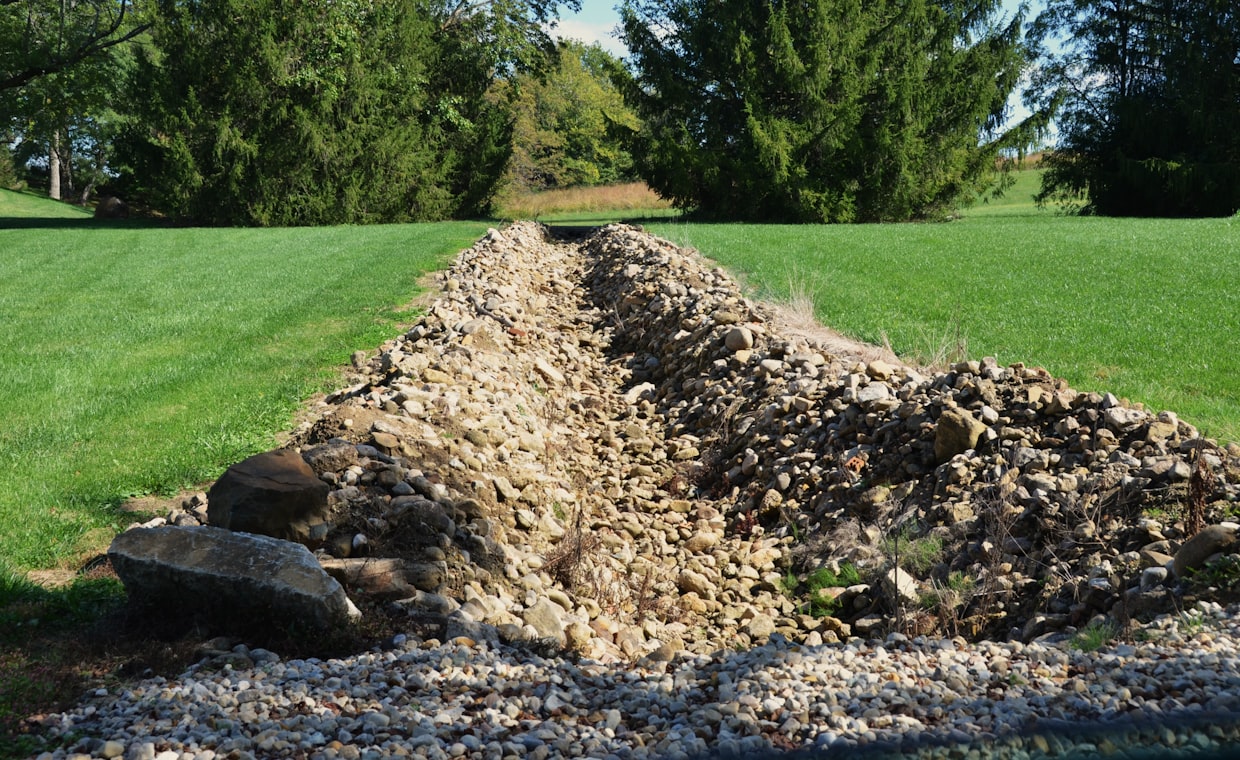
A french drain is not fancy. It is a trench filled with gravel and a perforated pipe that gives water an easy path to travel away from where you do not want it. Water always follows the route of least resistance, and a well built drain simply becomes that route.
The pipe sits at the bottom, wrapped in fabric so soil does not clog the holes, and the whole thing slopes gently toward a safe discharge point. That discharge might be a lower part of your property, a dry well, or a storm connection where local code allows it.
People sometimes confuse a french drain with a channel drain or a simple downspout extension. Those are cheaper, and for minor surface water they can be all you need. A true subsurface french drain is for water that is saturating your soil, not just puddling on top.
Exterior french drains manage water in the yard before it reaches your foundation. Interior french drains sit under the basement slab and catch water that has already made it inside. They solve different problems and cost very different amounts.
French Drain Cost in 2026
Most homeowners pay somewhere between $25 and $65 per linear foot for a professionally installed exterior french drain. A typical residential run of 50 to 100 feet lands in the $2,000 to $6,000 range once labor, materials, and cleanup are included.
Interior systems, the kind installed inside a basement to manage water that reaches the foundation, cost more because the crew has to break and repour concrete. Those often run $50 to $95 per linear foot, and a full perimeter can reach $8,000 to $15,000.
Here is how the common scenarios tend to shake out.
| Type of drain | Typical length | Ballpark total | Best for |
|---|---|---|---|
| Surface yard drain | 30-60 ft | $1,500-$3,500 | Soggy lawn, minor pooling |
| Exterior foundation drain | 60-120 ft | $4,000-$9,000 | Water pushing toward the house |
| Interior basement drain | Full perimeter | $8,000-$15,000 | Water already entering the basement |
| Curtain drain (hillside) | 50-100 ft | $3,000-$7,000 | Runoff from higher ground |
These are 2026 national ballparks. High cost metros push toward the upper end. Rural areas with easy digging often come in lower.
What Actually Drives the Price
Length is the obvious factor, but it is rarely the one that surprises people. The real budget movers are what the crew has to dig through and how far the water has to travel to get somewhere useful.
Rocky soil, tree roots, and clay all slow excavation and raise labor hours. A drain that has to cross under a patio, a driveway, or mature landscaping adds restoration costs that can rival the drain itself.
Depth matters too. A shallow yard drain is quick work. A drain that has to reach footing depth alongside your foundation means deeper trenches, more spoil to haul away, and sometimes shoring for safety.
How to Tell If Your Yard Actually Needs One
Not every wet spot calls for a french drain. Some of the most common complaints have simpler, cheaper answers, and a good contractor will tell you that instead of selling you trench.
Ask yourself where the water is coming from. If your gutters dump right at the foundation, extending the downspouts might fix everything. If the ground slopes toward the house, regrading the first several feet of soil away from the wall can do more than any drain.
A french drain earns its keep when water is genuinely saturating the soil and has nowhere lower to go. Signs include a lawn that stays spongy for days, efflorescence on basement walls, or standing water that reappears in the same spot every storm.
French Drains and the Rest of Your Water Plan
A french drain rarely works alone. In many homes it is one piece of a larger drainage picture, and understanding how the pieces fit keeps you from paying twice.
If your yard slopes hard toward the house, sometimes the smarter first move is grading or a structural fix. A poorly retained slope can push both soil and water toward your foundation, and in those cases the retaining wall cost may be part of the same conversation as your drain.
For interior systems, the drain almost always feeds a pit and a pump. That is where knowing your sump pump cost comes in, because the drain and the pump are usually bid together, and skimping on the pump undoes the whole system when the power goes out during the worst storm of the year.
Getting a Fair Quote
Get at least three bids, and be wary of anyone who quotes you without walking the property in the rain or asking where the water goes. A drain that discharges nowhere useful is just an expensive hole.
Ask each contractor to write down the linear footage, the trench depth, the pipe type, the fabric used, and the discharge plan. When the bids describe the same scope, you can actually compare the prices instead of guessing.
One more piece of advice. The cheapest bid often skips the fabric sock or uses undersized gravel, and those shortcuts stay invisible until the drain clogs. Pay for materials done right, and save on the parts you can genuinely trim.
How long does a french drain last?
A properly built exterior drain with quality fabric and clean gravel commonly lasts 20 to 30 years. Poor materials or a clogged discharge can cut that to just a few years, which is why installation quality matters more than the headline price.
Can I install a french drain myself?
A short, shallow yard drain is a realistic weekend project if you can rent a trencher and handle heavy gravel. Anything near the foundation, at footing depth, or inside the basement is worth hiring out, since mistakes there route water toward your home instead of away from it.
Will a french drain fix a wet basement on its own?
Sometimes, but often not by itself. If water is already entering, you usually need an interior drain paired with a sump pump, plus exterior fixes like regrading and downspout extensions to reduce the water reaching the wall in the first place.
A french drain is one of those projects where the right diagnosis saves you thousands. Take the time to figure out where your water is really coming from, get bids that describe the same scope, and do not let anyone rush you into the biggest system before the simpler fixes have been ruled out. Handle it that way, and you will spend what the problem actually requires, not a dollar more.