
Last spring I priced two outdoor kitchens in the same neighborhood, same week. One guy wanted a stainless grill dropped into a stone island with a little counter space. The other wanted a full L-shaped setup with a built-in grill, a fridge, a sink, a pizza oven, and a bar top for four stools.
The first job came in around $6,500. The second one closed at just under $38,000. Same zip code, same crew, wildly different checks. That gap is the whole story of outdoor kitchen pricing, and most homeowners have no idea which end they are actually standing on until the estimate lands.
So let me walk you through it the way I would at your kitchen table, with real numbers and the surprise line items nobody warns you about.
What You Are Really Paying For
An outdoor kitchen is not one purchase. It is a framework (the island or counter structure), the appliances that drop into it, the surface materials on top, and the utility runs that feed the whole thing.
The framework can be as cheap as a modular prefab kit or as pricey as a mason building block-and-mortar cabinetry on site. Appliances swing from a $500 box-store grill to a $9,000 built-in. And the utilities (gas, water, electric) are where budgets quietly detonate.
Most people fixate on the grill. But the grill rarely breaks the bank. It is the trenching and the countertop that get you.
The Three Tiers, Roughly
I bucket almost every project into three levels. Here is how they shake out in 2026 dollars.
| Build Type | Typical Cost | What You Get |
|---|---|---|
| Grill island / cart | $1,500-$6,000 | Freestanding or modular island, drop-in grill, small counter, no utilities beyond a gas line or propane tank |
| Mid-range built-in | $8,000-$18,000 | Masonry or steel-frame island, built-in grill, side burner, storage, stone counter, one or two utility runs |
| Full outdoor kitchen | $20,000-$45,000+ | L-shape or U-shape, multiple appliances, sink, fridge, bar seating, gas + water + electric, roof or pergola |
Those ranges assume normal access and normal soil. If your yard is up a hill or your only path is through a narrow side gate, add labor. Materials do not care about your terrain, but my crew does.
The Framework: Prefab vs. Built On Site
A modular prefab island ships in panels you assemble. Budget kits run $1,200-$3,500. They look fine, they go in fast, and if you ever move you can practically take them with you.
Built on site is a different animal. A mason framing a block island, coating it in stucco or stone veneer, and setting it level on a proper pad is $4,000-$12,000 in structure alone before a single appliance goes in. It lasts decades and it looks custom, because it is.
Appliances: Where Wants Get Expensive
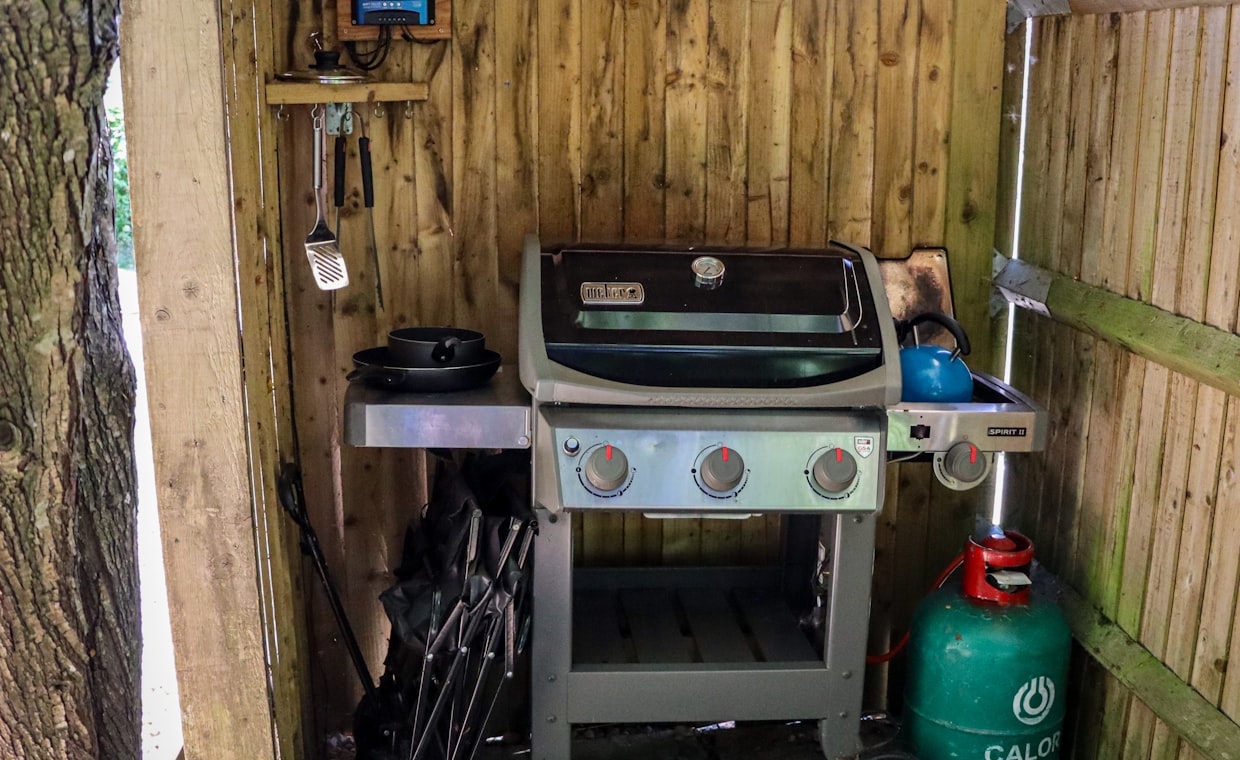
Here is the honest breakdown on the metal. A solid built-in grill runs $1,500-$4,000. A premium brand with rotisserie and searing burners can hit $6,000-$9,000.
Then the add-ons pile up. A side burner is $300-$800. An outdoor fridge is $700-$2,500 (get the outdoor-rated one, a regular fridge dies in a year outside). A sink with a faucet is $400-$1,200 installed, not counting the plumbing to reach it. A pizza oven runs from $500 for a countertop unit to $6,000 for a built-in wood-fired dome.
Each appliance feels reasonable on its own. A fridge here, a warming drawer there, a beer tap because why not. I have watched homeowners add $7,000 in gadgets one $600 decision at a time. Pick your must-haves before you shop, not while you are shopping.
The Surprise Line Items
This is the part nobody quotes upfront, and it is where I earn my reputation for being blunt.
Gas line. Running a new natural gas line from your meter to the island is $500-$2,500 depending on distance and whether we trench through a patio you already poured. If we have to break and re-pour concrete, that is another cost entirely.
Electrical. A dedicated GFCI circuit for the fridge, lights, and outlets runs $500-$1,500. More if the panel is on the far side of the house or needs an upgrade.
Water and drainage. A sink needs supply and a drain. In a lot of towns you cannot just dump gray water on the ground, so we tie into the sewer or a dry well. Figure $1,000-$3,000 all in.
The Foundation Nobody Budgets For
Your kitchen has to sit on something solid. A heavy masonry island on plain dirt or a thin slab will crack and settle. You want a proper reinforced pad, and if you are redoing the patio underneath, the surface choice matters for both cost and longevity.
That decision deserves its own homework. I always send clients to read up on patio paver vs concrete before we pour, because the base under your kitchen is a 20-year commitment and the two options age very differently.
Countertops follow the same logic as indoor kitchens, just tougher materials. Granite and porcelain slab hold up outdoors; laminate does not. Figure $60-$150 per square foot installed for stone that survives freeze-thaw and UV.
Fitting It Into the Bigger Backyard Budget
An outdoor kitchen rarely gets built in a vacuum. It usually rides along with a patio, seating, plants, and lighting, and the smart move is to plan the whole yard so you trench once instead of three times.
If you are staging the work, map the total project first. Our backyard makeover budget guide breaks down how to sequence a kitchen alongside the rest so you are not paying mobilization fees twice. And while the trench is open, run your low-voltage and irrigation sleeves at the same time. The math on that is in our outdoor lighting irrigation cost breakdown, and doing it together can save a thousand dollars in redundant digging.
Our backyard transformation case study shows a full yard where the kitchen was one of five line items, and how the owners phased it over two seasons to keep cash flow sane.
How to Not Overpay
Get three bids, and make sure each one itemizes the utility runs separately. A low bid that buries the gas and electric in a vague "site work" line is a low bid that grows.
Buy your own appliances if the contractor lets you. Markup on grills and fridges can be 20-30 percent, and you can often catch holiday sales the pros do not pass along.
And build the framework you can afford, not the appliances you want. A modest island with room to add a fridge next year beats a maxed-out kitchen you financed at 12 percent. The concrete does not know how much the grill cost.
Can I build an outdoor kitchen for under $5,000?
Yes, if you stick to a modular prefab island, a good drop-in grill, and a propane tank instead of a plumbed gas line. The moment you add a plumbed gas line, a sink, or built-in masonry, you are past that number fast.
Does an outdoor kitchen add resale value?
A well-built one in a warm climate can return a decent chunk of its cost and speed up a sale. In colder regions the payback is softer, so build it for your own enjoyment first and treat resale as a bonus, not the reason.
What is the single most expensive surprise?
Utility runs, almost every time. Trenching a gas line, adding a dedicated circuit, and plumbing a sink with proper drainage can quietly add $3,000-$6,000 that homeowners never saw coming.
An outdoor kitchen can be a weekend grill island or a second living room with a pizza oven. Neither is wrong. Just know which one you are building before the concrete truck shows up, price the utilities honestly, and pad your budget for the stuff nobody quotes. Do that and you end up with a setup you love instead of an invoice you resent. See you out back.