
A neighbor of mine called three companies about a dead silver maple leaning over her garage. The quotes came back at $850, $1,400, and $2,600 for the same tree. Same crew size, roughly the same afternoon of work, wildly different numbers. She nearly paid the highest one out of fear, because a dead tree over a roof feels like an emergency you should not negotiate.
It is not an emergency you should overpay for, though. Tree removal pricing follows a fairly predictable logic once you know what the crew is actually pricing: height, trunk thickness, how close it sits to things that can break, and whether you want the stump gone too. A 25-foot ornamental in an open backyard is a different animal from a 70-foot oak threading power lines and a fence.
I spend most of my year helping homeowners decide where outdoor money earns its keep, and dead-tree removal is one of those line items that buys safety and curb appeal at the same time. Let me walk through the cost the way I would for a friend staring at three very different bids.
What Tree Removal Actually Pays For
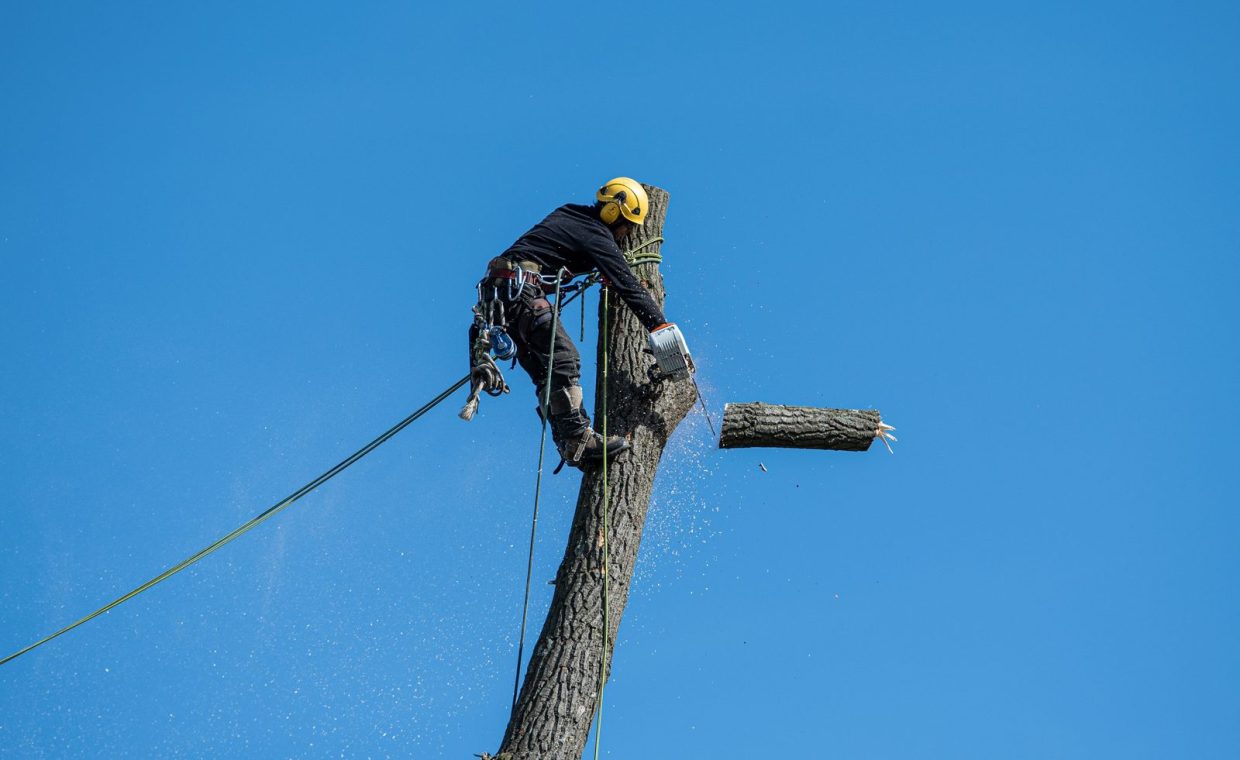
Tree removal is the labor and risk of cutting down a tree, lowering it in controlled sections, and hauling the debris off your property. You are paying for skilled climbers, rigging, a chipper, sometimes a crane, and the insurance that covers all of it when a limb the size of a phone pole comes down near your siding.
A typical job runs roughly $400 to $2,000, with most mid-size suburban trees landing around $700 to $1,300. The biggest, most awkward removals can push past $3,000 once a crane or extended cleanup enters the picture.
Here is a quick example. A healthy 30-foot crepe myrtle in the middle of a lawn might cost $450 because the crew can simply fell it and chip it. A 65-foot dead pine wedged between your house and your neighbor's fence might cost $2,200 for the exact same height of wood, because every cut has to be roped and lowered by hand.
People assume a dead tree is cheaper to remove because the wood is lighter and "already half gone." It is often the opposite. Dead and rotting wood is unpredictable, climbers cannot trust the limbs to hold their weight, and crews price that danger in. Decay raises the bid, it does not lower it.
Pricing By Tree Size
Size is the single biggest driver, and crews think in terms of height combined with trunk diameter. A tall, skinny tree and a short, fat one can cost the same because volume and weight matter more than height alone.
Small, medium, and large in plain numbers
- Small (under 30 feet): ornamentals, young trees, tall shrubs. Typically around $200 to $600.
- Medium (30 to 60 feet): many maples, birches, and crabapples. Usually $600 to $1,200.
- Large (60 to 80 feet): mature oaks, pines, and ash. Commonly $1,200 to $2,200.
- Very large (80 feet and up): heritage oaks and tall conifers. Often $2,000 to $3,500-plus.
A quick aside from the field: I have watched two oaks of identical height get bids $500 apart purely because one had a trunk you could not wrap your arms around. More wood means more cuts, more chipping, and more truckloads hauled away.
Access, Hazards, and the Stuff That Moves the Number
After size, access is what separates a $700 job from a $1,500 one. Access means how easily the crew and their equipment can reach the tree and drop wood safely.
An open backyard with a wide gate is the dream. Crews can park the chipper close, fell sections onto open grass, and clear out fast. A tree boxed in by a fence, a pool, power lines, or a tight side yard forces them to climb, rig, and lower every piece by rope, which can add 40% to 80% to the labor.
When you call for bids, mention what surrounds the tree before they arrive: fences, a deck, the roof line, irrigation heads, lighting. A crew that knows the constraints quotes more accurately and is less likely to hit you with a change order mid-job. If a new deck or patio sits below the canopy, say so, because protecting finished surfaces takes extra rigging time.
Other factors that push the price up: a tree leaning the wrong way (toward the house instead of the open yard), proximity to power lines (which sometimes means looping in the utility first), and steep or muddy ground that keeps equipment from getting close.
Stump Grinding and Removal
Here is the part homeowners forget until the crew is packing up: the stump usually stays unless you pay extra. Felling the tree and grinding the stump are two separate services.
Stump grinding chews the stump down to a few inches below grade so you can plant grass or a bed over it. Expect roughly $100 to $400 per stump, often priced by diameter at around $3 to $5 per inch, with a typical minimum charge. Full stump and root removal, where they dig the whole root ball out, costs more and tears up more lawn.
| Line item | Typical range (USD) | What drives it |
|---|---|---|
| Small tree removal (under 30 ft) | $200 - $600 | Height, easy access |
| Medium tree removal (30-60 ft) | $600 - $1,200 | Trunk size, some rigging |
| Large tree removal (60-80 ft) | $1,200 - $2,200 | Climbing, hazards nearby |
| Crane assist (large or boxed-in trees) | +$500 - $1,500 | Equipment and operator |
| Stump grinding (per stump) | $100 - $400 | Diameter, root spread |
| Debris and log haul-away | $50 - $200 | Volume, dump fees |
| Permit (where required) | $50 - $250 | Local rules, protected species |
If you do not grind the stump, ask whether the crew can at least cut it flush and leave the wood chips for free. Many will. You can let it rot naturally, though that takes years and can invite carpenter ants close to the house.
Permits, Insurance, and Hidden Costs
Some towns require a permit to remove a tree above a certain trunk size, especially street trees or protected species. Permits usually run $50 to $250, and removing a regulated tree without one can mean a fine that dwarfs the savings. A reputable company will know your local rules, so ask.
Insurance is non-negotiable. Always confirm the company carries liability coverage and workers' compensation before anyone climbs. If an uninsured crew member gets hurt on your property, or a limb crushes your fascia and soffit on the way down, you can end up liable. The cheapest bid is rarely cheap if it skips coverage.
After a big storm, out-of-town crews knock on doors offering "today only" deals on hazard trees. Some are fine; many overcharge, lack local insurance, and vanish before the stump is ground. For a dead or risky tree, get at least two written bids from established local arborists, even when it feels urgent.
Where Tree Removal Fits in the Outdoor Budget
I always frame removal as the first move in a larger outdoor plan, not a standalone expense. Taking down a dead tree often opens a sunny spot that changes what the rest of the yard can do.
That freed-up light might be the reason a new planting bed finally thrives, or the push to add landscape lighting and irrigation to a corner that used to sit in deep shade. Some homeowners roll the savings from a smaller-than-expected removal bid into a backyard deck project where the canopy used to block the view. And while the crew is on site, it is a good moment to check whether falling limbs damaged your fascia and soffit, since those repairs are cheaper bundled than discovered later.
Is it cheaper to remove a tree in winter?
Often yes. Demand drops in the cold months, the ground is firmer for equipment, and bare branches are easier to rig. You can sometimes save 10% to 20% by scheduling an off-season removal rather than booking in peak spring or after a storm.
Does homeowners insurance cover tree removal?
Usually only when a covered event, like a storm, drops the tree onto an insured structure. Removing a healthy or simply dead tree for your own reasons is almost always out of pocket. Check your policy and ask your agent before assuming a claim applies.
Can I remove a small dead tree myself?
A short ornamental in an open spot, maybe. Anything tall, near a structure, or over power lines belongs to a pro with rigging and insurance. The savings are not worth a chainsaw kickback or a limb through your roof, and a misjudged drop can cost far more than the bid you were trying to avoid.
If you take one thing from all this, let it be that a scary dead tree does not have to mean a scary invoice. Get two or three written bids, ask exactly what is and is not included (especially that sneaky stump), and confirm the insurance. Spend the money you save on the part of the yard you will actually enjoy. That is how I would handle it, and how I'd tell my neighbor to handle hers.