
Stand in your backyard and picture a 16-by-20-foot deck, the most common size I see homeowners build. At a mid-range price, that platform runs somewhere around $9,000 to $14,000 installed. Push it higher off the ground, wrap it in composite, and add aluminum railing, and you can clear $25,000 without touching a single fancy upgrade.
The spread is wide because a deck is really four decisions stacked together: how big, what material, how high, and how you finish the edges. Each one nudges the number, and a couple of them nudge it hard.
I have walked plenty of clients back from sticker shock by showing them which choices actually change the bill and which ones they are overthinking. Let me break the whole thing down the way I would over coffee with a friend who just got three confusing quotes.
Start With Square Footage, Not Material
Most people anchor on decking boards first. I do it backwards on purpose, because size sets the floor for every other cost.
A reasonable rule of thumb for a fully installed deck is roughly $30 to $60 per square foot for pressure-treated wood, and roughly $60 to $90 per square foot for composite. That price already folds in framing, fasteners, and labor, not just the boards you can see.
Example: a 12-by-12-foot deck (144 square feet) in pressure-treated lumber lands around $4,500 to $8,500. Double the footprint to 16-by-18 (288 square feet) and you are looking at roughly $9,000 to $17,000 in that same wood.
"A bigger deck just costs proportionally more." Not quite. Doubling the size often costs a little less than double per square foot, because the crew is already on site and some setup costs are fixed. The footings, design fee, and mobilization spread across more boards.
Material Is the Single Biggest Lever
If you want to move the number up or down by thousands, this is the dial. The gap between the cheapest and priciest decking is bigger than any other choice on the project.
Here is roughly how the common materials stack up on installed cost per square foot:
| Decking material | Installed cost per sq ft | Typical lifespan | Notes |
|---|---|---|---|
| Pressure-treated pine | $30 to $60 | 10 to 15 years | Cheapest upfront, needs sealing |
| Cedar or redwood | $40 to $75 | 15 to 20 years | Naturally rot-resistant, ages gray |
| Composite (mid-grade) | $60 to $90 | 25 to 30 years | Low maintenance, no staining |
| Capped composite or PVC | $70 to $110 | 30 plus years | Best stain and fade resistance |
| Tropical hardwood (ipe) | $80 to $130 | 25 to 40 years | Beautiful, heavy, hard to work |
Wood wins on day one. Composite wins over a decade once you count the stain, sealer, and weekends you did not spend on a ladder. If you are torn between the two, our deep dive on deck wood versus composite walks through the long-term math with real numbers.
Height Quietly Drives the Bill
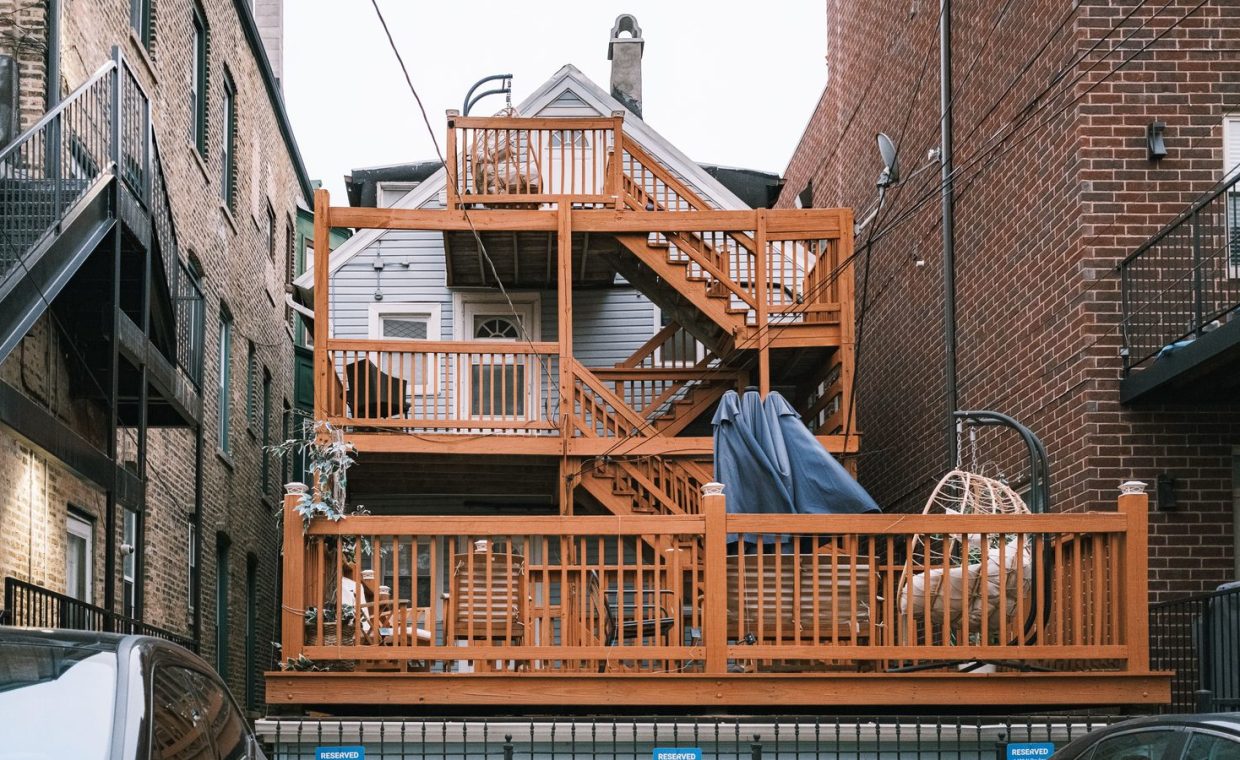
This is the cost most homeowners forget, and it surprises them on the quote. A deck that sits a foot off the ground and a deck that floats eight feet up are two different animals structurally.
A low ground-level deck needs simple footings and no stairs to speak of. An elevated deck off a second story needs taller posts, beefier beams, deeper footings, a code-required guardrail, and a staircase that can run $1,500 to $4,000 on its own.
Why height adds up
- Footings: taller posts need deeper, wider concrete footings to stay stable, sometimes $150 to $400 each.
- Bracing and beams: elevated framing uses more lumber and engineered connectors.
- Stairs: every run of steps is its own little structure with its own labor.
- Railing: any deck more than 30 inches off the ground legally needs a guardrail.
If your yard slopes, a low deck on the high side can save thousands versus elevating the whole thing to meet the back door. Sometimes the cheapest design works with the grade instead of fighting it.
Railing Choices: Small Square Footage, Big Price Swing
Railing is the upgrade that sneaks up on people. It covers maybe a fraction of the deck, but it can swallow 15 to 25 percent of the total budget because it is sold by the linear foot and the nice options are not cheap.
Here is the range I quote, installed, per linear foot:
- Pressure-treated wood railing: roughly $20 to $40 per linear foot.
- Composite railing: roughly $40 to $70 per linear foot.
- Aluminum railing: roughly $50 to $90 per linear foot.
- Cable or glass railing: roughly $90 to $200 per linear foot.
On a deck with 60 feet of railing, jumping from wood to cable can add $5,000 or more. Cable and glass look stunning and preserve a view, so if your deck overlooks something worth seeing, that money buys real enjoyment. If it faces a fence, basic powder-coated aluminum gives you 90 percent of the clean look for half the price.
I always tell clients to think about railing the way they think about a fence priced by material. The per-foot logic is identical, and the temptation to over-spec the part everyone touches is exactly the same.
The Line Items People Forget
Materials and labor are the headline, but a real deck budget has a few supporting characters that show up on the final invoice.
| Line item | Typical cost | When it applies |
|---|---|---|
| Building permit | $150 to $700 | Almost always for attached or elevated decks |
| Design or engineering | $300 to $1,500 | Larger, elevated, or custom layouts |
| Footings and concrete | $1,000 to $3,000 | Every deck, more for tall ones |
| Old deck demolition | $500 to $2,000 | Replacing an existing structure |
| Built-in features | $1,000 to $8,000 | Benches, lighting, pergola, skirting |
Skipping the permit is a tempting way to save a few hundred dollars, and it is a mistake I have watched cost people far more. An un-permitted deck can stall a home sale and force a costly tear-out later.
Get the permit. An inspector signing off on your footings and railing height is cheap insurance, and lenders and buyers will ask for that paperwork down the road.
Where Your Dollars Buy the Most Joy
After the structure is sound, spend on the things you touch and see every day. A slightly smaller deck in great composite beats a huge deck in boards you will resent staining every spring.
Lighting is the upgrade with the best ratio of cost to delight. A few hundred dollars in post-cap and stair lights turns a deck into an evening room. Skirting and a clean fascia board are cheap finishing touches that make a budget deck read as custom.
And think about sequencing. A deck is one of several big outdoor and exterior projects competing for the same savings, so I tell clients to weigh it against pressing needs like a new roof and its cost before locking in the dream version. The deck can wait a season. A failing roof usually cannot.
Is it cheaper to build a deck or a patio?
A ground-level paver patio is often cheaper per square foot than a deck, roughly $15 to $40 installed, because it skips framing and footings. A deck wins when you need to span a slope or match a raised door, where a patio would require expensive retaining walls.
Does a new deck add value to my home?
A well-built deck typically returns a solid share of its cost at resale, often more than half, especially mid-range wood decks in markets where outdoor living is prized. The structural quality and how naturally it connects to the house matter more than premium decking for resale.
Can I save money by building the deck myself?
A capable DIYer can save 40 to 60 percent on labor on a simple low deck. I would not attempt an elevated deck or complex framing yourself, since footing depth and guardrail strength are safety-critical and inspectors will check them closely.
Price your deck as four decisions, not one big scary number, and the quotes stop feeling random. Nail down size and height first, choose a material you will actually enjoy living with, and put your splurge into railing and lighting only where they earn it. Do that, and you end up with a deck that fits both your yard and your budget, which is the whole point of building one.