
Last spring I stood on a two-story Cape with a soft spot near the valley that a homeowner swore was "just a few shingles." Once we pulled the first course, we found two layers of old asphalt, rotted decking, and a flashing job held together by hope. That $9,000 estimate became $14,500, and the owner had no idea why until I walked him through every layer.
A new roof is one of the biggest exterior expenses most people will ever pay for, and the final number swings wildly. In 2026, a straightforward replacement on an average single-family home runs roughly $9,000 to $22,000, with plenty of jobs landing on either side of that range.
I want to break down the pieces a roofer sees but a homeowner rarely does. Once you understand what drives the price, an estimate stops feeling like a guess and starts looking like math.
What "a new roof" actually includes
When people picture a roof replacement, they think of shingles. The shingles are maybe a third of the story. A real replacement is a system: decking, underlayment, ice and water shield, flashing, ventilation, drip edge, and the visible roofing material on top.
Here is an example. On a typical 1,800-square-foot home, you are usually covering around 20 to 22 roofing squares (a square equals 100 square feet of roof surface). That includes the pitch and overhangs, so your roof area is always bigger than your house's footprint.
Underlayment, flashing, and ventilation fail just as often as shingles. If a contractor quotes you a price without inspecting the decking and flashing, that number is a placeholder, not an estimate.
Cost by roofing material
Material is the single biggest lever on price. The same crew, the same house, a different product, and your total can double. I've installed all of these, and each one trades cost for lifespan and looks.
| Material | Installed cost per square (100 sq ft) | Typical total (avg home) | Expected lifespan |
|---|---|---|---|
| 3-tab asphalt shingle | $350 - $500 | $7,000 - $11,000 | 15 - 20 years |
| Architectural shingle | $450 - $700 | $9,000 - $16,000 | 25 - 30 years |
| Standing-seam metal | $900 - $1,600 | $18,000 - $35,000 | 40 - 70 years |
| Cedar shake | $800 - $1,400 | $16,000 - $30,000 | 25 - 40 years |
| Concrete or clay tile | $1,000 - $2,000 | $20,000 - $45,000 | 50+ years |
Architectural asphalt is the sweet spot for most homeowners, which is why it sits on so many roofs. If you want to weigh durability against price across more options, the roofing material cost comparison goes deeper than a single table can.
How pitch and size move the number
Two roofs of the same square footage can cost very differently, and pitch is usually why. A steep roof is slower and more dangerous to walk, so labor climbs.
Pitch, in plain terms
Pitch is the rise over a 12-inch run. A 4/12 roof is a gentle walk. An 8/12 means we are roping off and moving carefully, and a 12/12 often needs scaffolding or roof jacks. Each step up can add 10 to 25 percent to labor.
Size compounds everything. More squares means more material, more underlayment, more fasteners, and more man-hours. A sprawling ranch with lots of valleys and hips can cost more per square than a simple two-story gable, even with the same total area, because cut-up roofs waste material and slow the crew.
Count your roof's "planes." A simple roof has two large planes. If you can see six or more, expect higher labor and more flashing work. Every valley and dormer is a place water wants to get in, and a place we have to detail by hand.
The tear-off nobody budgets for
Tear-off is removing the old roofing down to the deck, and it's the line item homeowners forget. Hauling and disposal aren't free, and the dumpster alone can run $400 to $900.
Expect tear-off to add roughly $1 to $5 per square foot depending on how many layers are up there and how the debris gets handled. A two-layer tear-off costs noticeably more than one, both in labor and in dump fees.
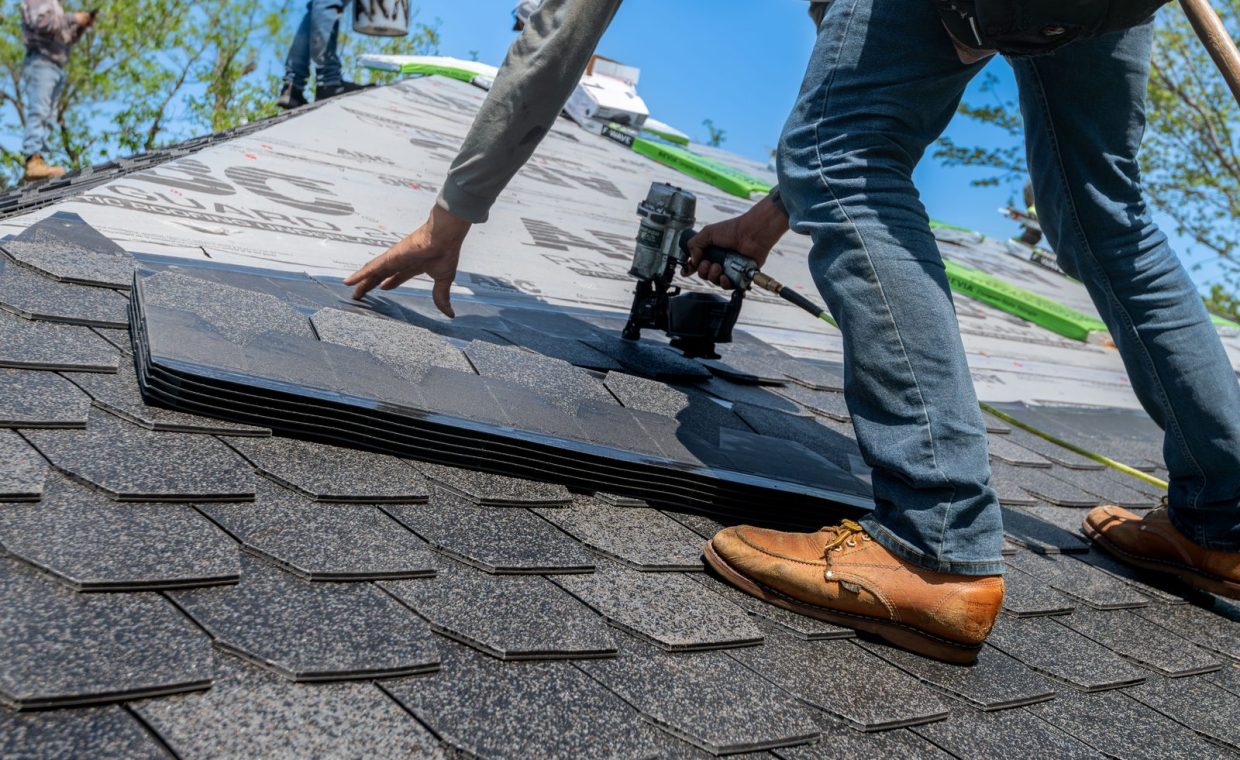
Some homeowners ask about a "roof-over," laying new shingles on top of old. It's cheaper up front, usually saving $1,000 to $3,000, but you're hiding any deck rot and shortening the new roof's life. I rarely recommend it, and many codes only allow one overlay anyway.
If your decking is rotted or delaminated, it has to be replaced, and that surprise often surfaces only after tear-off. Budget a cushion for sheathing at roughly $70 to $120 per 4x8 sheet installed. On the Cape I mentioned, bad decking added almost $2,000.
Labor, materials, and permits broken out
Homeowners always want to know where the money goes. Here's how a mid-range architectural shingle job tends to split.
- Labor: roughly 40 to 60 percent of the total. This is the part that climbs with pitch, height, and complexity.
- Materials: roughly 35 to 50 percent. Shingles, underlayment, flashing, vents, drip edge, and fasteners.
- Permits and disposal: usually 5 to 15 percent. Permit fees commonly run $150 to $500, and dumpsters add their own line.
Tear-off and the new roof are often the same week a homeowner rethinks the rest of the exterior. If shingles and trim are coming off, it can be the right moment to compare notes on siding cost by material and bundle the work while the crew and dumpster are already on site.
What pushes your price up or down
After enough roofs, the cost drivers become predictable. These are the ones I point out on every walkthrough.
- Up: steep pitch, multiple stories, heavy tear-off, lots of valleys and skylights, premium material, and tight access for the dumpster.
- Up: chimney and wall flashing that needs full replacement, plus any deck rot.
- Down: a simple gable, single existing layer, easy ground access, and scheduling in the slower off-season.
- Down: getting three written quotes so contractors know they're competing.
One honest aside: the cheapest bid is rarely the best value on a roof. The corners that get cut, skimpy underlayment, reused flashing, no ridge ventilation, are exactly the ones that cause leaks five years later. If you're already planning outdoor upgrades and pricing out a new deck cost the same season, fold the roof into a single contractor conversation so nothing competes for the same dumpster space or budget.
Ways to keep the cost reasonable without cutting corners
You don't have to overpay to get a roof done right. A few practical moves protect both your wallet and the work.
Get at least three itemized quotes and make sure each one spells out tear-off, decking allowances, flashing, and ventilation separately. Vague one-line bids hide the parts that matter.
Schedule in late fall or winter if your climate allows, since crews are hungrier for work and pricing softens. And keep a 10 to 15 percent contingency for whatever the tear-off reveals, because on older homes, it usually reveals something.
How long does a roof replacement actually take?
Most average homes are done in one to three days, weather permitting. Steep, large, or tile roofs can stretch to a week. Tear-off and dry-in usually happen the same first day so your home is never left fully exposed overnight.
Is metal roofing worth the higher cost?
If you plan to stay in the home long term, often yes. Metal can cost two to three times more than asphalt up front, but with a 40 to 70 year lifespan you may never replace it again. For a home you'll sell soon, architectural shingle usually makes more financial sense.
Will insurance pay for my new roof?
Insurance typically covers sudden damage like a storm or fallen tree, not gradual wear or age. If a hailstorm or wind event caused the damage, document it with photos and file promptly. Replacing a roof that simply aged out comes out of your own pocket.
A roof is the one part of your house doing its job every single day, rain or shine, and you never see it work. Spend a little time understanding the layers before you sign, get a few itemized bids, and keep a cushion for surprises under the old shingles. Do that, and you'll know exactly what you're paying for, and why. I'd rather you ask too many questions now than call me about a leak next winter.