
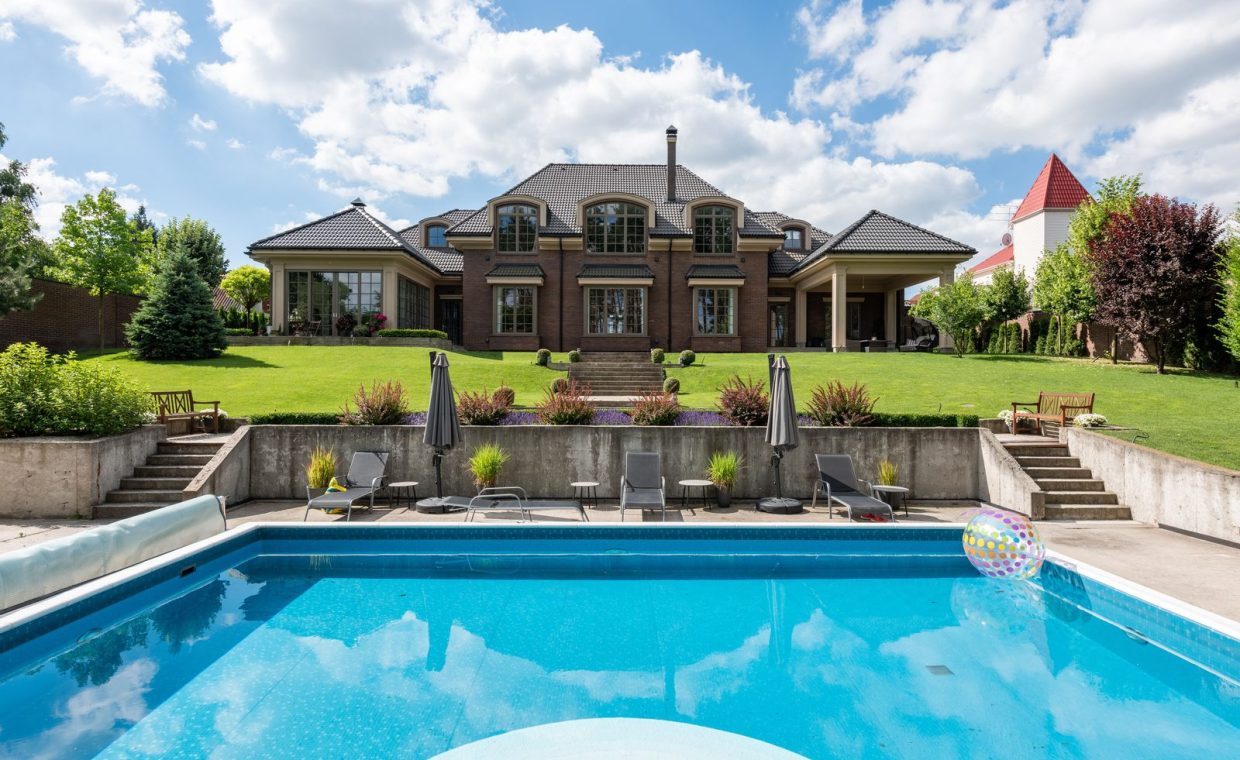
A neighbor of mine signed a contract for a gunite pool last spring, thrilled to land it at $62,000 after shopping three builders. What she did not budget for was the $4,800 her water bill, electric bill, and chemical runs added the following year. The pool was beautiful. The math just kept going long after the trucks left.
That gap between the install quote and the real cost of ownership is where most pool dreams get bruised. I spend my days helping homeowners decide where outdoor dollars actually buy joy, and a pool can absolutely deliver it. But only if you walk in seeing the whole picture, not just the shiny number on page one of the proposal.
So let me break down what an in-ground pool truly costs, both the build and the bills nobody mentions at the sales table.
The Install Price: What You Are Really Paying For
An in-ground pool install in the US typically runs from roughly $35,000 to $90,000, with most mid-range projects landing around $55,000 to $70,000. The spread is enormous because "pool" covers everything from a simple vinyl rectangle to a freeform gunite resort with a spa.
The price is driven mostly by the shell type. Here is how the three common builds compare.
The Three Shell Types
- Vinyl liner: the budget entry point, roughly $35,000 to $55,000 installed. Liners need replacing every 7 to 12 years at around $4,000 to $6,000 a pop.
- Fiberglass: a pre-molded shell dropped into the hole, roughly $45,000 to $75,000. Fast install, smooth surface, fewer chemicals over time.
- Gunite or concrete: the premium custom option, roughly $60,000 to $100,000 and up. Any shape you want, but it needs resurfacing every 10 to 15 years.
People assume gunite is "the real pool" and the others are cheap knockoffs. Not true. Fiberglass shells last decades and cost far less to maintain. Builders push gunite partly because it carries the fattest margin. Pick the shell that fits your yard and your patience, not the one with the most prestige.
The Line Items Hiding in the Quote
A clean headline price almost never includes everything you need to actually swim. When you read a proposal, look for what is bundled and what is listed as "additional." The extras add up fast.
Here is a realistic breakdown for a mid-range gunite build in a typical suburban yard.
| Line Item | Typical Range | Notes |
|---|---|---|
| Excavation and site prep | $5,000 - $12,000 | Rocky soil or tight access pushes this up fast |
| Pool shell and structure | $25,000 - $40,000 | The core build cost |
| Decking (concrete, pavers) | $6,000 - $20,000 | Pavers cost more than broom-finish concrete |
| Permits and inspections | $500 - $3,000 | Varies wildly by municipality |
| Fencing and safety barrier | $2,500 - $7,000 | Required by code in most US states |
| Equipment (pump, filter, heater) | $3,500 - $9,000 | A heater alone can run $3,000+ |
| Electrical and gas lines | $2,000 - $6,000 | Often subbed out separately |
The fencing line surprises people every time. Most US jurisdictions require a barrier of a specific height with self-latching gates, and "I have a privacy fence already" rarely satisfies the code inspector. Budget for it from day one.
The Bills Nobody Mentions
This is the part the sales rep waves off with "oh, it's pretty cheap to run." It is not pretty cheap. A pool is a small utility account that never closes.
Annual ownership costs typically land around $3,000 to $6,000, sometimes more in hot climates with a heated pool. Let me show you where that goes.
Where the Money Leaks
- Electricity: the pump runs hundreds of hours a season. Expect roughly $300 to $1,000 a year, less if you switch to a variable-speed pump.
- Water: evaporation and backwashing mean refilling regularly. Figure $200 to $600 a year, higher in dry, windy regions.
- Chemicals: chlorine, balancers, and shock run roughly $400 to $1,000 a year. Saltwater systems cut this but add a cell replacement every few years.
- Repairs and maintenance: pumps fail, liners tear, heaters quit. Set aside $500 to $1,500 a year so a dead pump in July is annoying, not catastrophic.
If you do nothing else, get a variable-speed pump instead of a single-speed. It costs maybe $400 to $800 more upfront and can shave hundreds off your yearly electric bill. Over the life of the pool, it is the easiest money you will ever save outdoors.
What Moves the Price Up or Down
Two identical pools can quote $20,000 apart based on factors that have nothing to do with the pool itself. Knowing these helps you steer the budget.
Site access is the big silent multiplier. If a full-size excavator can roll straight to the dig site, you save thousands. If the crew has to hand-dig or bring in a mini-excavator because your only access is a four-foot side gate, the labor cost climbs hard.
Soil and water table matter too. Rocky ground, clay, or a high water table can add expensive engineering. I have seen a "surprise" bedrock seam add $8,000 to an excavation overnight.
Timing and region swing it as well. Booking a build in the off-season, fall or winter in much of the US, often nets a better price because builders are hungry for work. Sunbelt states with year-round pool seasons tend to run higher on ongoing costs but more competitive on install.
The cheapest pool you can buy is the one sized right for your yard the first time. Tearing out and redoing decking or fencing later costs double.
Spending Where It Actually Adds Enjoyment
As a landscape editor, I think about return on enjoyment, not just resale. A pool rarely returns its full cost at sale, so the payoff has to come from how much you use and love it.
Put your money into the things you touch every day. Good decking and a comfortable surround beat an oversized pool you swim in twice a month. The same logic I give people choosing between sod and seed for a fast, usable lawn applies here: spend for the experience you will actually live with.
And do not skimp on the build team. A pool is a major structural project tied into your home's electrical and drainage. The same care you would use when vetting and hiring a landscaper applies double for a pool builder. Check licenses, pull references, and read the contract line by line.
A pool changes how water moves around your property. More splash-out, more runoff near the foundation, and more strain on your drainage. If your gutters are already tired, factor a gutter replacement into the same budget season so water from the roof and the pool both end up where you want it, away from the house.
A Realistic Budget Plan
Here is how I would frame it for a first-time buyer. Take your install quote, then add a 15 percent contingency for the surprises that always appear once digging starts.
Then build a separate annual line in your household budget, somewhere around $4,000, for running costs and repairs. If you treat the pool as a yearly expense and not a one-time purchase, you will never get that gut-punch utility bill my neighbor got.
A pool can be one of the best outdoor investments you make in pure happiness. Just go in with eyes open and a budget that covers the whole life of the thing, not only the day the water goes in.
How much does an in-ground pool cost to install?
Most in-ground pools in the US run roughly $35,000 to $90,000, with mid-range builds around $55,000 to $70,000. Vinyl is cheapest, gunite is priciest, and fiberglass sits in the middle with lower long-term upkeep.
What does it cost to maintain a pool each year?
Plan on roughly $3,000 to $6,000 a year covering electricity, water, chemicals, and repairs. Hot climates and heated pools land at the higher end. A variable-speed pump and a saltwater system can trim the chemical and electric portions over time.
Does a pool add value to my home?
Sometimes, but rarely its full cost. A pool typically recoups a fraction of the install price at resale and can even narrow your buyer pool in some markets. Buy a pool for enjoyment, not as a financial investment.
If you take one thing from all these numbers, let it be this: budget for the years, not just the build. Walk into the showroom knowing your real all-in figure and you get to enjoy the water instead of dreading the mailbox. That is the difference between a pool that delights you and one that quietly drains you. Happy swimming, and may your first summer be the fun kind of expensive.