
A few years back I priced a kitchen for a couple who wanted a $9,000 built-in espresso station tucked into a wall of cabinets. Beautiful idea. I told them the truth: they'd use it for about six months, then it would become the most expensive spot in the house to set their car keys. They built it anyway. When they sold three years later, the buyer's first comment was that they'd probably rip it out.
I've priced thousands of remodels, and the pattern repeats. People spend big on features that photograph well, feel luxurious in the showroom, and then quietly fail to earn their keep. The money doesn't vanish all at once. It leaks out in line items that sounded reasonable one at a time.
Here are eight splurges I see homeowners regret most, with rough numbers on what each one actually adds to a job. None of these are "never do it" rules. They're "know what you're paying for" warnings.
1. The Pro-Grade Range You'll Never Cook Like
A 48-inch professional range with the brass knobs and the dual fuel setup runs roughly $7,000 to $14,000, and that's before the matching hood and the gas line upgrade. Compare that to a solid 30-inch slide-in at $1,500 to $3,000 that cooks dinner just fine.
The part nobody mentions: those big ranges often need a beefier gas line and a commercial-style vent hood pulling 600 to 1,200 CFM. That vent can mean a makeup-air system to keep your house from going negative pressure, which adds $1,500 to $4,000 on its own.
Unless you genuinely cook for a crowd weekly, the $10,000 range buys you bragging rights, not better food. A buyer rarely pays a premium for it, and the warranty headaches are real.
2. Top-Tier Cabinets When Refacing Would Do
Full custom cabinetry for an average kitchen lands somewhere around $20,000 to $50,000 installed. That's a stunning number for boxes that mostly hide behind doors. If your existing cabinet boxes are solid, you're often paying to throw away perfectly good structure.
Refacing the boxes you already have, with new doors and drawer fronts, typically runs $4,000 to $12,000. I walk a lot of clients through the math in my breakdown of cabinet refacing versus replacing, because the right call depends entirely on the condition of what's already in your kitchen.
Splurging on custom makes sense when your layout is changing or your boxes are water-damaged particleboard. When the bones are good, premium new cabinets are mostly money spent on demolition and disposal.
3. The Soaking Tub That Becomes a Plant Shelf
Freestanding soaker tubs photograph like a spa. In daily life, a lot of them get used a handful of times a year. A quality freestanding tub is $1,200 to $4,000, plus $500 to $1,500 in plumbing to relocate supply and drain lines for that floating look.
Then there's the floor. Tubs are heavy, and a full one can run 500 to 700 pounds. On a second floor, I've had to add joist reinforcement, another $1,000 to $3,000 depending on access.
If you actually soak, build it. If you're a shower person buying a tub because the magazine had one, you're paying $4,000 to $8,000 for a sculpture. Most buyers under 45 tell their agent they'd prefer a bigger walk-in shower anyway.
4. Heated Floors Through the Whole House
Radiant floor heat under a bathroom feels fantastic on a cold morning, and a single bathroom system is a reasonable $600 to $1,500 installed. The regret shows up when people run it through the entire main floor.
Electric radiant across 1,000 square feet can hit $8,000 to $15,000, and your monthly electric bill climbs noticeably. Hydronic (water-based) systems cost even more up front, often $6 to $20 per square foot, because you're running a boiler loop.
Keep radiant heat to the rooms where you stand barefoot: bathrooms and maybe a kitchen. Whole-house radiant rarely returns its cost, and a buyer almost never knows it's there.
5. Smart-Home Wiring That's Obsolete by Move-In
I've watched people drop $10,000 to $30,000 on integrated smart-home systems during a remodel: motorized shades, in-wall touch panels, multi-room audio hardwired into the studs. The trouble is the technology dates faster than the drywall.
The in-wall touchscreen that cost $1,200 looks ancient in five years, and the proprietary hub gets discontinued. Meanwhile a $40 plug-in smart switch does most of what the homeowner actually wanted.
If you love the gear, run extra conduit and good wiring while the walls are open. That's cheap insurance, maybe $500 to $2,000. Hardwiring expensive proprietary panels is the part that turns into landfill.
6. Imported Stone Where Quartz Was Fine
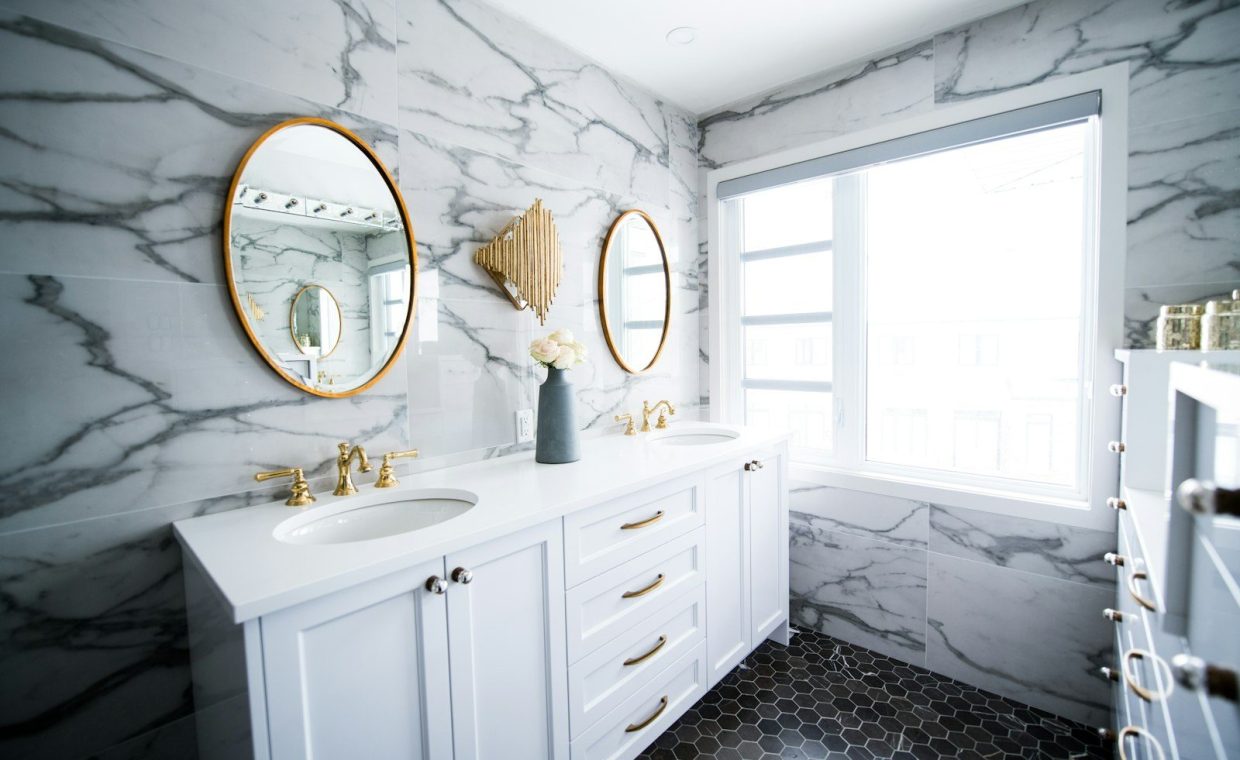
Exotic imported marble or rare quartzite can run $100 to $250 per square foot installed, and the dramatic veined slabs push past that. A typical kitchen has 40 to 55 square feet of counter, so the upgrade from a mid-range surface to a showpiece slab can add $4,000 to $9,000.
Here's the catch with natural marble: it stains and etches. One glass of red wine or a wedge of lemon left overnight, and you've got a permanent mark. I've had clients in tears over a $7,000 island they were afraid to cook on.
Engineered quartz at $50 to $100 per square foot installed looks nearly as good, shrugs off acid and stains, and never needs sealing. For a kitchen that gets used, it's the smarter spend almost every time.
7. Over-Built Outdoor Kitchens
A full outdoor kitchen with a built-in grill, side burners, a refrigerator, a sink, and stone surround commonly runs $15,000 to $40,000 once you factor in the gas line, the electrical, the plumbing, and the masonry. In most of the country, you use it maybe four months a year.
The appliances also live outside, so they corrode and need replacing far sooner than indoor units. That built-in fridge rated for outdoor use is $1,500 to $3,500 and still tends to die in a handful of seasons.
A good freestanding grill on a nice patio gives you 80 percent of the experience for a fraction of the cost. The built-in version rarely returns more than half its price at resale, and it locks your layout in concrete.
8. Whirlpool Jets and Other High-Maintenance Extras
Jetted tubs, steam showers, and similar mechanical luxuries carry a hidden tax: maintenance and the eventual repair. A jetted tub adds $1,500 to $4,000 over a standard tub, and the pump and lines need cleaning or they grow mildew you can smell.
Steam shower generators run $2,500 to $6,000 installed and need a dedicated, sealed enclosure plus a vapor-proof ceiling. When the generator fails out of warranty, you're looking at a real repair bill and a wet hole in your tile.
Buyers increasingly see these as liabilities, not selling points. A home inspector flags them, and the next owner wonders what it'll cost to fix. If you genuinely want one, go in knowing it's a lifestyle purchase, not an investment.
Layout, lighting, storage, and the everyday surfaces you touch return far more value than trophy features. If you're trying to trim a budget, start with my rundown on practical ways to cut remodeling costs before you start cutting the rooms themselves.
How to Decide What's Worth It for You
My simple test: will you use it weekly, and would a future buyer pay extra for it? If both answers are yes, splurge with a clear conscience. If only one is yes, scale it down. If both are no, it's ego spending, and that's fine as long as you call it what it is.
I also tell people not to finance the trophy items. Stretching a loan to cover a $10,000 range you'll use twice a month is a bad trade. If you're weighing how to pay for a project, it's worth reading through the realistic home project financing options first, then spending the borrowed money on the parts of the house that work every single day.
Do any luxury features actually add resale value?
A few do, but it's usually the practical ones: a well-designed kitchen layout, good lighting, energy-efficient windows, and an extra bathroom. Trophy items like pro ranges and steam showers rarely return their full cost, and many return less than half.
Is it ever smart to buy the high-end version?
Yes, when you'll genuinely use it often and it fits how you live. A serious home cook gets real value from a pro range. The mistake is buying the feature for the photo, not the daily use.
How much should I budget for "nice but not essential" upgrades?
A common guideline is to keep discretionary splurges under about 10 to 15 percent of the total remodel budget. That leaves room for the structural and functional work that actually has to be right, like wiring, plumbing, and a layout that works.
Spend on the bones, the layout, and the surfaces your hands touch every day. Save the showpiece features for the ones you'll truly use, and don't borrow against the trophies. A kitchen that works beats a kitchen that just looks expensive, and your wallet will agree every month after the contractor leaves.