
Last spring I stood in a backyard in Denver where the lawn dropped almost six feet from the patio to the fence line. The homeowners had two quotes in hand for the same wall: one for $4,800 and one for $19,000. Same length, same slope, wildly different numbers. The gap was not a scam. It was material, height, and a word most people forget to ask about, drainage.
Retaining walls are one of those outdoor projects where the price you hear first is almost never the price you pay. A short decorative border and a structural wall holding back tons of saturated soil are different animals, even if they look similar from the street.
So let me walk you through how these walls are actually priced, concept by concept, with real ranges. By the end you should be able to read a quote and know whether you are looking at a fair number or a fantasy.
Why retaining walls are priced by the square foot of face
Contractors do not price retaining walls by length alone. They price by the wall's face area, meaning length times height. A 40-foot wall that is 2 feet tall is a very different job from a 40-foot wall that is 5 feet tall, even though both are 40 feet long.
As a rough anchor, installed retaining walls run roughly $25 to $75 per square foot of face for most residential materials. A modest segmental block wall might land near the low end, while a poured concrete or natural stone wall climbs toward the top.
A 30-foot wall at 3 feet tall is 90 square feet of face. At $40 per square foot, that is roughly $3,600 installed. Bump the same wall to 5 feet tall and you are at 150 square feet, closer to $6,000, and the engineering requirements change too.
The myth: "It's only 30 feet, it should be cheap." Length is the least important number. Height drives material volume, the size of the base, and whether you legally need an engineer.
Material choices and what each one really costs
Material is the biggest lever you control. Here is how the common options compare, and where I'd spend if the wall is visible from a patio versus hidden behind a shed.
| Material | Installed cost per sq ft | Best for |
|---|---|---|
| Treated timber | $15 - $30 | Budget walls, short heights, casual yards |
| Segmental concrete block (SRW) | $30 - $55 | Most homeowners, clean modern look |
| Poured concrete | $40 - $70 | Tall structural walls, long lifespan |
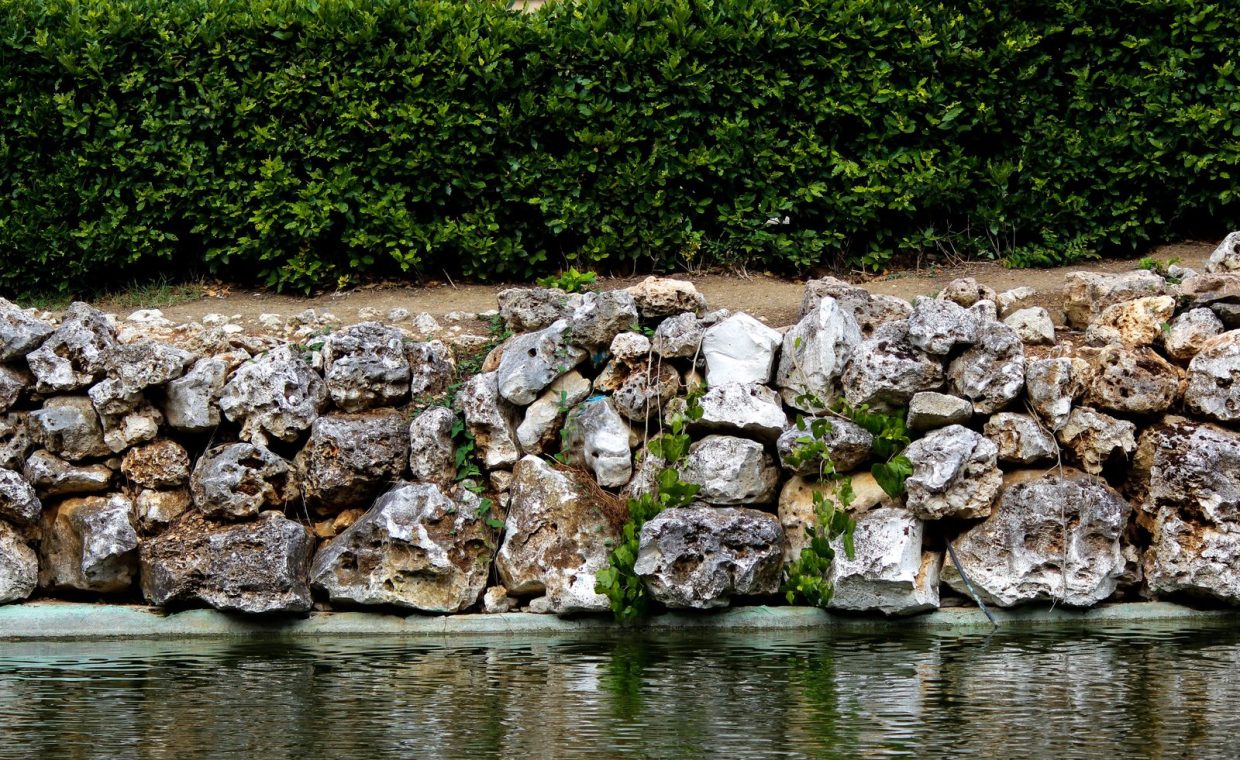
| Natural stone (dry-stacked) | $40 - $80 | Premium curb appeal, rustic lots |
| Boulder / rock wall | $35 - $65 | Large slopes, naturalized landscapes |
Timber is the cheapest entry, but I'm honest with clients: even treated wood usually shows rot in 15 to 20 years against wet soil. Segmental block is the sweet spot for most yards because it installs fast, comes in dozens of looks, and does not need forms or curing time.
Where the look is worth paying for
If a wall frames a seating area or anchors a view, natural stone earns its premium. If it lives behind the garage holding up a side yard, block or boulders do the same structural job for less. Spending big on a wall nobody sees is one of the classic outdoor budget mistakes I see homeowners make again and again.
How height changes everything, including the law
Height is not just a cost multiplier. It is a structural and legal threshold. In most US jurisdictions, walls over 3 to 4 feet tall require a permit and an engineered design. That stamp alone can add roughly $500 to $2,500 in design and review fees.
Taller walls also need deeper bases, geogrid reinforcement layers buried back into the hillside, and sometimes tiered designs instead of one tall face. A 6-foot wall is not twice the price of a 3-foot wall. It is often three or four times the price once engineering and reinforcement are added.
If your slope wants a 5-foot wall, ask about two stepped 30-inch walls instead. Tiering can drop you below the permit-and-engineer threshold and often costs less overall, while looking more intentional. I've saved clients thousands this way.
Drainage: the line item that quietly saves the wall
Here is the part the cheap quote usually skips. A retaining wall holds back soil, and wet soil is brutally heavy. Without drainage, water builds up behind the wall, the pressure (called hydrostatic load) multiplies, and the wall bows, cracks, or fails.
Proper drainage means gravel backfill, a perforated drain pipe at the base, and sometimes a filter fabric to keep soil out of the gravel. Expect this to add roughly $10 to $25 per linear foot. On that 30-foot wall, that is another $300 to $750.
A quote that is dramatically cheaper than the others is often cheaper because it leaves out drainage and base prep. That is the wall most likely to lean within five years. Saving $600 now to spend $6,000 on a rebuild later is a bad trade.
It reminds me of the pattern I described in our guide to avoiding roofing scams: the lowest bid often wins by removing the invisible work that actually matters. Soil and water do not care how the wall looks on day one.
What a full retaining wall budget looks like
Let me put real numbers on a typical job so the pieces make sense together. This is a 40-foot segmental block wall at 4 feet tall on a moderate slope.
- Materials (block, gravel, geogrid, drain pipe): roughly $2,000 to $3,500
- Labor (excavation, base, stacking, backfill): roughly $3,500 to $6,000
- Drainage system: roughly $400 to $1,000
- Permit and engineering (4-foot wall): roughly $500 to $2,000
- Site access and haul-off of excavated soil: roughly $300 to $1,500
Add it up and that wall typically lands somewhere around $7,000 to $13,000 installed. Tight backyard access, rocky soil, or a steep grade pushes it higher because the crew works slower and hauls more.
What moves the price up or down
Two identical walls can differ by thousands based on conditions, not material. Here is what I watch for when I help someone budget.
- Access: A machine that can reach the wall saves days of labor. Hand-carrying block down a narrow side yard is the silent budget killer.
- Soil type: Clay holds water and needs more drainage. Rocky ground slows excavation.
- Existing wall removal: Tearing out a failing timber wall can add $1,000 or more.
- Curves and steps: Curved or terraced designs cut more block and take longer than a straight run.
- Caps and finishes: Capstones, lighting, and integrated seating are lovely but add up fast.
If you want to see how a wall fits into a larger yard plan rather than as a standalone cost, our backyard transformation case study walks through how the wall budget traded off against patio and planting choices on a real sloped lot.
Short decorative wall under 3 feet: often $2,000 to $5,000. Mid-size structural wall around 4 feet: typically $7,000 to $13,000. Tall or engineered wall over 5 feet: easily $15,000 and up. Drainage and permits are not optional extras, they are the wall.
Do I really need a permit for a retaining wall?
In most US areas, walls over 3 to 4 feet tall require a permit and an engineered design. Shorter decorative walls usually do not, but always check your local code, because a wall that fails inspection later can cost far more to fix.
Why is one quote half the price of another?
Almost always because the cheap quote leaves out base prep, drainage, or reinforcement. Ask each contractor to itemize gravel backfill, drain pipe, and geogrid. If those lines are missing, the price is not really comparable.
Can I save money by building it myself?
For a short wall under about 2 feet, a careful DIYer can save on labor. Above that, the engineering, drainage, and weight of materials make professional installation worth it. A leaning or collapsed wall is the most expensive mistake of all.
If you take one thing from all this, let it be that the wall you can see is only half the project. The base, the drainage, and the reinforcement behind it are what keep your money in the ground instead of sliding down the hill. Walk your slope, measure the real height, and ask every contractor the same itemized questions. A good wall, built right the first time, quietly disappears into the yard and lasts for decades. That is exactly what you want from it.