
The last full gut I priced was a 12-by-14 bedroom that the homeowner swore was "basically empty." We pulled the drywall and found knob-and-tube wiring, a wasps' nest the size of a basketball, and a water-stained sill plate that had been quietly rotting for a decade. That "simple" demo job grew by $4,200 before we'd hung a single new stud.
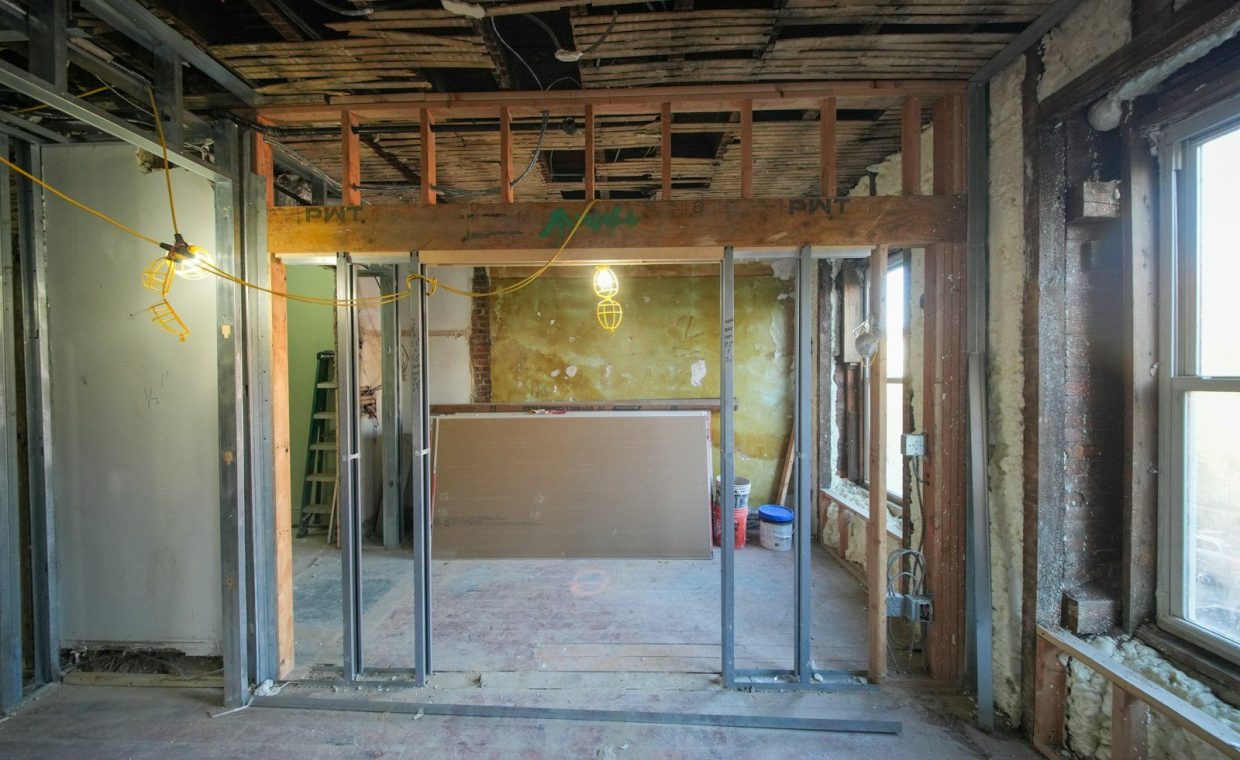
Gutting a room to the studs means stripping everything back to bare framing: drywall gone, insulation pulled, old wiring and plumbing exposed, sometimes the subfloor up too. People budget for the glamorous part (the new finishes) and forget the unglamorous part (getting the room down to nothing first).
So let me walk you through what a gut actually costs, line by line, and where the money quietly disappears when nobody's watching.
What "to the Studs" Actually Means
A gut renovation isn't the same as a refresh. When a contractor says "down to the studs," he means every surface comes off until you're staring at the wooden skeleton of the room.
That includes drywall or plaster, insulation, trim, flooring (sometimes), and the rough mechanicals stay exposed so they can be inspected or replaced. A surface remodel might run roughly $5,000 to $15,000 for a room. A true gut starts where that ends.
Example: A homeowner wants to "redo" a bathroom. If the tile is dated but the layout works, that's a refresh. But if they want to move the toilet, fix soft floors, and rewire for a heated floor, you're gutting. The price gap between those two jobs is easily double.
People assume demolition is the cheap part because "anyone can swing a sledgehammer." Swinging it is cheap. Doing it without cutting a live wire, a gas line, or a load-bearing surprise is what you're actually paying for. A clean, code-aware demo protects everything you spend afterward.
The Demolition Line Item
Pure demo labor on a single room typically runs around $1,000 to $3,000, depending on size and what's coming out. Plaster walls cost more to remove than drywall because they're heavier, dustier, and full of lath that fights you the whole way.
Here's the breakdown I usually give people for the teardown phase alone:
- Drywall removal: roughly $1 to $3 per square foot of wall.
- Plaster and lath removal: roughly $3 to $6 per square foot (it's slow, brutal work).
- Flooring tear-out: roughly $1 to $4 per square foot depending on glue, tile, or multiple layers.
- Insulation removal: roughly $1 to $2 per square foot, more if it's blown-in or contaminated.
If you're only taking down one partition rather than the whole room, the math changes a lot. I broke that scenario down separately in our guide on the cost of removing an interior wall, because a load-bearing wall drags engineering and beam costs into the picture.
Disposal: Where the Dumpster Eats Your Budget
This is the cost nobody pictures. Demo debris is heavy and bulky, and hauling it away is its own bill.
A standard 10-yard dumpster runs roughly $300 to $500 for a week. A 20-yard, which you'll want for a full room gut with plaster, runs roughly $400 to $700. Go over the weight limit and you're paying overage fees that can tack on another $100 to $300 fast.
Plaster and old tile are dense, so they fill a dumpster by weight long before they fill it by volume. I've watched a "small" bathroom gut max out a 20-yard container on weight alone.
Schedule the dumpster delivery for the day demo starts, not three days early. Most companies charge by the rental period, and an idle dumpster sitting in your driveway is money burning while you wait on a permit or a crew. Time it tight.
Permits, Inspections, and the Stuff Behind the Walls
Once the walls are open, the inspector's world opens with them. Any time you touch electrical, plumbing, or structural framing, your municipality usually wants a permit.
Permit costs vary wildly by location but typically land around $200 to $1,000 for a single-room gut involving mechanicals. Skipping them feels cheaper until you sell the house and a buyer's inspector flags unpermitted work, which can stall or sink the sale.
What inspectors commonly find
An open wall is an honest wall. It tells you everything the previous owner hid. The most common surprises I see are outdated wiring, undersized plumbing, hidden water damage, and framing that was never quite right.
None of these are optional fixes once they're exposed. An inspector who sees knob-and-tube isn't going to let you bury it again. Budget a contingency, because the wall always has an opinion.
On any full gut, set aside an extra 15 to 20 percent of your total budget for things you can't see until the drywall is down. On older homes (pre-1970), push that toward 25 percent. The owners who skip this contingency are the ones who run out of money halfway and end up living in a half-finished room for a year.
Rebuilding From Bare Framing
Tearing down is half the job. Now you're putting the room back together from nothing, and this is where the bulk of the cost lives.
Rough-in work (new electrical, plumbing, and HVAC adjustments) commonly runs roughly $3,000 to $8,000 for a single room, depending on how much you're moving. After that comes insulation, new drywall, taping, and finishing.
| Phase | Typical cost (single room) | What drives it up |
|---|---|---|
| Demolition labor | $1,000 - $3,000 | Plaster walls, tile, multiple floor layers |
| Disposal / dumpster | $400 - $900 | Weight overages, multiple hauls |
| Permits / inspections | $200 - $1,000 | Electrical, plumbing, structural scope |
| Electrical rough-in | $1,500 - $4,000 | Full rewire, added circuits, panel work |
| Plumbing rough-in | $1,000 - $4,000 | Relocating fixtures, old pipe replacement |
| Insulation + drywall | $2,000 - $5,000 | Soundproofing, high ceilings, level-5 finish |
| Finishes (paint, trim, floor) | $3,000 - $12,000 | Material grade, custom work |
Add those up and a straightforward single-room gut-and-rebuild commonly lands somewhere around $12,000 to $35,000. A kitchen or bathroom, with cabinets, fixtures, and tile, climbs well past that. We tracked one of those start to finish in our kitchen remodel case study, and the gut phase alone was a third of the total.
Where the Money Quietly Disappears
After pricing thousands of these, the budget killers are almost always the same three things, and none of them are the finishes people obsess over.
First, change orders. You open the wall, decide to also move a doorway, and suddenly the electrician's back for a second visit at full rate. Second, weight-based disposal overages nobody warned you about. Third, hiring cheap demo labor that damages framing or plumbing you then have to pay a real pro to fix.
That last one bites hard. I've been called in to clean up after a bargain crew more than once, and re-doing botched work always costs more than doing it right the first time. If you're already in that hole, our guide on what to do when a contractor leaves a bad job walks through your real options.
A full room gut to the studs runs roughly $12,000 to $35,000 once you add demo, disposal, permits, rough-in, and finishes. The teardown looks cheap and the rebuild looks expensive, but it's the hidden stuff behind the walls that decides whether you finish on budget or not.
How to Keep the Number From Climbing
You can't control what's behind the drywall, but you can control how the job is run. A few habits separate the projects that land on budget from the ones that don't.
- Get a detailed scope in writing so "to the studs" means the same thing to you and your contractor.
- Decide finishes before demo starts. Mid-project shopping is the number one cause of delay and cost creep.
- Front-load the contingency mentally. If you don't spend it, great. If you need it, you're not panicking.
- Don't pay large sums up front. Tie payments to completed phases so the work stays moving.
Can I save money by doing the demolition myself?
Sometimes, but be careful. DIY demo can save roughly $1,000 to $2,500 in labor, but only if you safely shut off power and water first and don't damage framing or pipes. One nicked plumbing line or a cut load-bearing surface erases the savings instantly.
Do I really need a permit just to gut one room?
For pure cosmetic teardown, often no. The moment you touch electrical, plumbing, or structural framing, almost every municipality requires one. Permits typically run around $200 to $1,000, and unpermitted work can complicate a future home sale.
Why is plaster so much more expensive to remove than drywall?
Plaster is heavier, dustier, and backed by wood lath that has to come off too. That means slower labor (roughly double drywall's per-square-foot cost) and a heavier dumpster that hits weight limits and triggers overage fees faster.
A gut to the studs is one of the few projects where the boring line items, the dumpster, the permit, the contingency, decide your outcome more than the finishes ever will. Price those honestly up front and the rest of the job tends to behave. Get a couple of detailed bids, ask exactly what's included in "demo," and keep that 20 percent cushion right where you can reach it.