
A reader sent me her contractor's quote last spring: $24,000 to redo a 5x8 hall bathroom. No new layout, same footprint, builder-grade everything. She wanted to know if she was being fleeced. So I did what I always do. I called three suppliers, priced the same fixtures she was getting, and asked two contractors I trust to walk through the line items with me.
The short version: she was paying a fair price for a mid-range job, but about $3,000 of it was avoidable. That gap is the whole reason I write these. A bathroom remodel is one of the most expensive square-footage projects in the house, and the price hides in places most homeowners never look.
Below I break the cost down the way a real estimate does, piece by piece, so you can see where every dollar lands and which dollars you actually control.
What "bathroom remodel" actually means on an invoice
The phrase covers everything from a weekend vanity swap to gutting the room to the studs. Those are not the same animal, and lumping them together is how people get blindsided.
A cosmetic refresh keeps the plumbing and layout in place. New vanity, new toilet, new mirror, paint, maybe a re-glazed tub. That runs roughly $3,000 to $8,000.
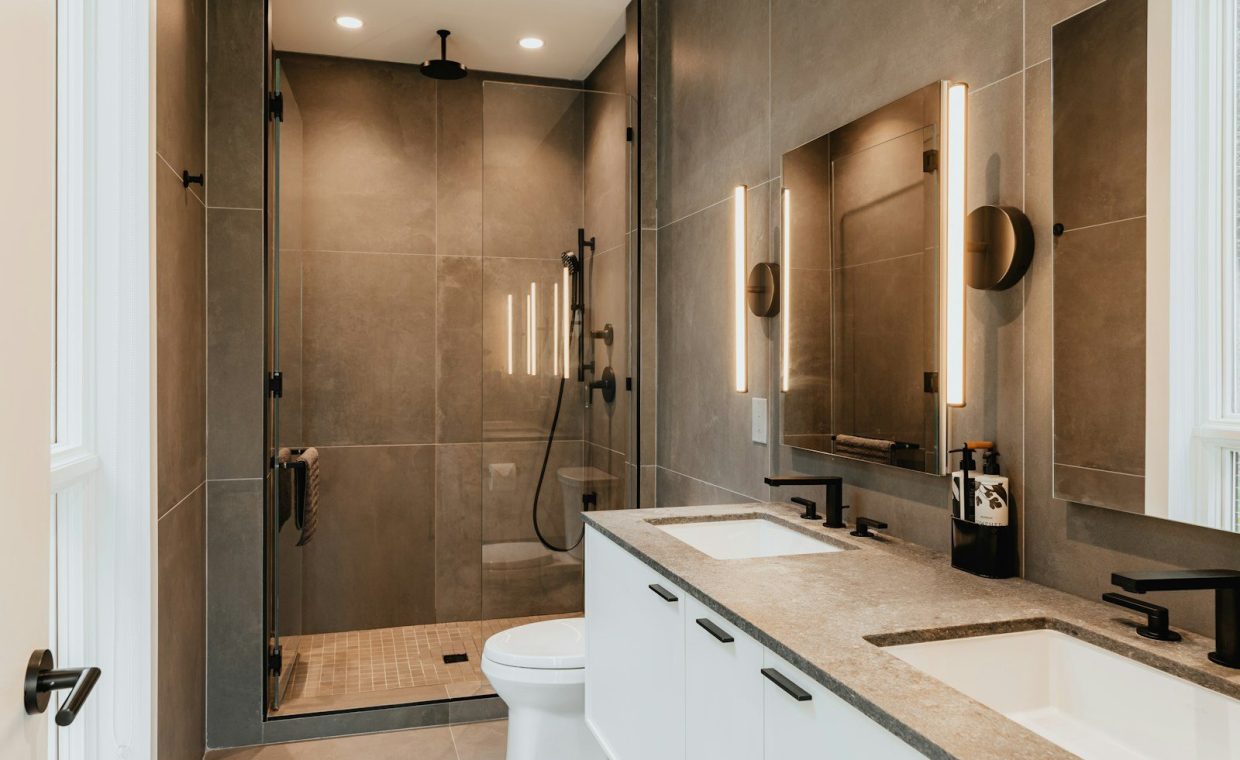
A mid-range remodel replaces fixtures and finishes, retiles the floor and shower, and updates lighting, all on the existing footprint. Figure roughly $12,000 to $25,000 for a standard hall bath.
A full gut or layout change moves walls or plumbing, often in a primary bath. That climbs to roughly $30,000 to $60,000 and up.
"Bathrooms cost the same per square foot as the rest of the house." Not even close. A 40-square-foot bath can cost more than a 200-square-foot bedroom because of the plumbing, waterproofing, and tile labor packed into that tiny space.
Labor: the line item that surprises everyone
Materials get all the attention because you can see and touch them. But on most mid-range jobs, labor eats roughly 40 to 65 percent of the total. That is the number people forget when they budget off a showroom tile price.
Here is why. A bathroom is a relay race of trades. The demo crew, the plumber, the electrician, the tile setter, the drywaller, and the painter all touch the room, often on separate days. Each one has a minimum charge, and the small footprint does not shrink it.
Plumbers typically bill $85 to $150 an hour, electricians about the same. A skilled tile setter might run $10 to $25 per square foot for labor alone on a shower, more if you choose small mosaics or a herringbone pattern that takes longer to lay. If you want to understand the logic behind these numbers, my breakdown of how contractors price jobs walks through the markup and minimums that drive a quote.
The fixture and material breakdown, item by item
This is the part readers ask for most, so here is a real line-item table for a mid-range hall bath. These are illustrative market ranges for materials only, before labor.
| Line item | Builder-grade | Mid-range | High-end |
|---|---|---|---|
| Toilet | $120 - $250 | $300 - $600 | $700 - $1,500 |
| Vanity + countertop | $300 - $700 | $800 - $2,000 | $2,500 - $6,000 |
| Sink + faucet | $100 - $250 | $300 - $600 | $700 - $1,800 |
| Tub or shower base | $200 - $500 | $600 - $1,500 | $2,000 - $5,000 |
| Tile (floor + walls) | $400 - $900 | $1,000 - $3,000 | $3,500 - $8,000 |
| Lighting + exhaust fan | $150 - $400 | $450 - $900 | $1,000 - $2,500 |
| Plumbing fixtures (valve, trim) | $150 - $350 | $400 - $800 | $900 - $2,000 |
Notice the spread. The same room can cost $1,400 in fixtures or $25,000, and the labor barely changes. That is your single biggest lever.
Splurge on the shower valve and the faucet, since replacing them later means opening a wall. Save on the toilet and the mirror, where a $200 model and a $900 model flush and reflect identically.
Plumbing and the cost of moving water
Keeping fixtures where they are is the cheapest decision you can make. Moving them is where budgets quietly double.
Relocating a toilet means moving the drain and the vent stack, which can mean opening the floor or a downstairs ceiling. That single change often adds $1,500 to $4,000. Moving a shower or swapping a tub for a curbless walk-in shower can add even more once you factor in re-sloping the drain and waterproofing.
I once watched a "simple" layout flip turn into a $9,000 plumbing surprise because the old cast-iron stack had to come out. So before you fall in love with a new floor plan, ask the contractor what is behind the wall. The answer changes the math.
Permits and the inspection you cannot skip
Any job that touches plumbing or electrical usually needs a permit. Expect roughly $200 to $1,200 depending on your city and the scope. It feels like a tax, but a permit means an inspector confirms the waterproofing and wiring are right, which matters a lot in a room that gets wet every day.
Skipping it to save a few hundred dollars can cost you at resale, when an unpermitted bath becomes a negotiating chip for the buyer.
What moves the final number up or down
Two identical-looking bathrooms can land thousands apart. Here are the swing factors I see most:
- Tile choice and pattern. Large-format tile lays fast; tiny mosaics and intricate patterns triple the setter's hours.
- Hidden damage. Rot behind the tub or mold under the subfloor is common and almost never in the original quote. Keep a 10 to 15 percent contingency.
- Layout changes. Same footprint is cheap. Moving plumbing or walls is expensive.
- Your zip code. Labor in a major metro can run double a rural rate for the exact same work.
- Finish level. The fixture spread in that table above is the easiest place to add or shave thousands.
If you're weighing this against larger projects, it helps to see it in context. A single bath often costs a meaningful slice of a whole-home renovation budget, and per square foot it usually runs higher than something like a finished basement cost, where you are mostly framing open space rather than waterproofing and tiling a wet room.
A realistic budget you can actually use
For the reader I mentioned up top, here is roughly how her $24,000 mid-range hall bath broke down: about $9,000 in labor across the trades, $7,500 in fixtures and tile, $1,500 in permits and disposal, and the rest in markup, drywall, paint, and the contingency that hidden damage ate into.
The $3,000 she could have saved was sitting in two places: a high-end vanity she didn't love, and a decorative tile pattern that added a full day of setter labor. Neither showed up in resale value. Both showed up on the invoice.
That is the lesson I keep landing on. Read the line items, ask what is behind the wall, and spend your money where it is hard to change later.
How long does a typical bathroom remodel take?
A mid-range hall bath usually takes two to three weeks of actual work, though scheduling gaps between trades can stretch the calendar to four or five weeks. A full gut with a layout change can run six weeks or more.
Is it cheaper to remodel one big bathroom or two small ones?
Two small ones almost always cost more in total. Each room carries its own plumbing minimums, trade trips, and fixture set, so you pay for two relay races instead of one.
Can I lower the cost by doing some work myself?
Demo, painting, and hauling debris are reasonable DIY savings, often a few hundred to a couple thousand dollars. Leave the plumbing, the shower waterproofing, and the electrical to licensed pros, since mistakes there get expensive and dangerous fast.
If you take one thing from all this, let it be the habit of reading the estimate line by line. The fair deals and the bad ones look identical from the showroom floor. They only separate once someone bothers to add up the parts. Price your own fixtures, ask the contractor the awkward questions, and you'll know exactly what you're paying for before the first tile comes off the wall.