
I called three painters last spring for a friend's 1,900-square-foot two-story colonial. The bids landed at $4,200, $6,800, and $9,500 for what sounded like the same job. Same house, same address, same "paint the outside." That spread is not a fluke, and it is the whole reason this guide exists.
The gap usually comes down to four levers: how much surface there is, how many stories the crew has to reach, how much prep the old paint demands, and what grade of paint goes on the wall. Pull those apart and the pricing stops feeling like a slot machine.
I read all three of those contracts line by line and called the paint suppliers myself. Here is what a fair exterior painting deal actually looks like, and where the cheap bid was quietly cutting corners.
Square Footage Is the Starting Meter, Not the Final Bill
Painters price off the surface area they have to coat, not the floor space inside. A 2,000-square-foot home does not mean 2,000 square feet of wall. Crews estimate exterior wall area, then add for trim, soffits, and fascia.
As a rough rule, expect roughly $2 to $5 per square foot of home footprint for a standard two-coat job. That covers labor and mid-grade paint on a straightforward house in decent shape.
Example: A single-story 1,500-square-foot ranch with good siding typically runs around $3,000 to $6,000. A 2,500-square-foot two-story with a lot of trim can climb to $7,500 to $12,000 once height and detail enter the math.
People assume a house twice the size costs exactly twice as much. It rarely does. Setup, masking, and travel are mostly fixed, so larger homes often get a slightly better per-square-foot rate. The jump comes from height and trim, not raw size alone.
Stories and Reach: Why the Second Floor Costs More
Height is one of the biggest hidden multipliers. A single-story home lets a crew work off ground ladders and move fast. A second or third story means taller ladders, scaffolding, or a lift, plus slower, more careful work.
That extra reach can add 20 to 50 percent to the labor portion of a quote. A three-story Victorian with steep roof lines and hard-to-reach gables is the most expensive shape to paint, period.
What reach actually adds
- Single story: baseline labor, fastest setup.
- Two story: roughly 15 to 30 percent more labor for ladder and safety time.
- Three story or steep grades: add scaffolding or lift rental, often $300 to $800 on top.
One painter told me he charges by the "danger of the day." If he needs a harness and a spotter, the price reflects it. I respect the honesty more than the bid that pretends a gable peak paints itself.
Prep Work: The Line Item That Decides Your Whole Project
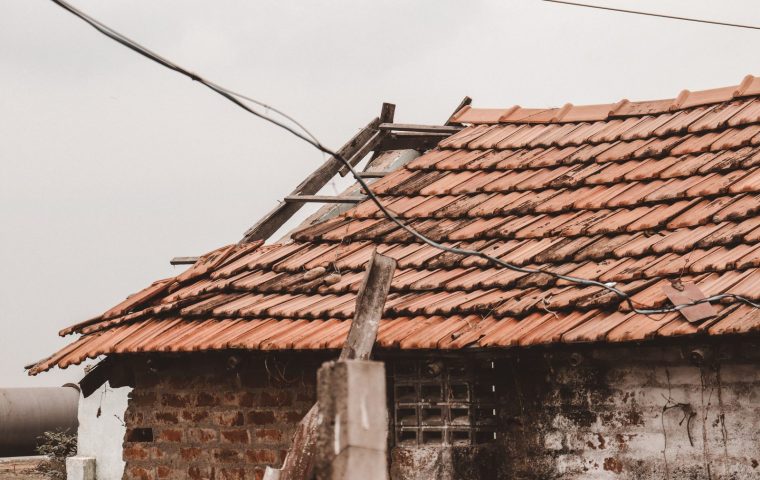
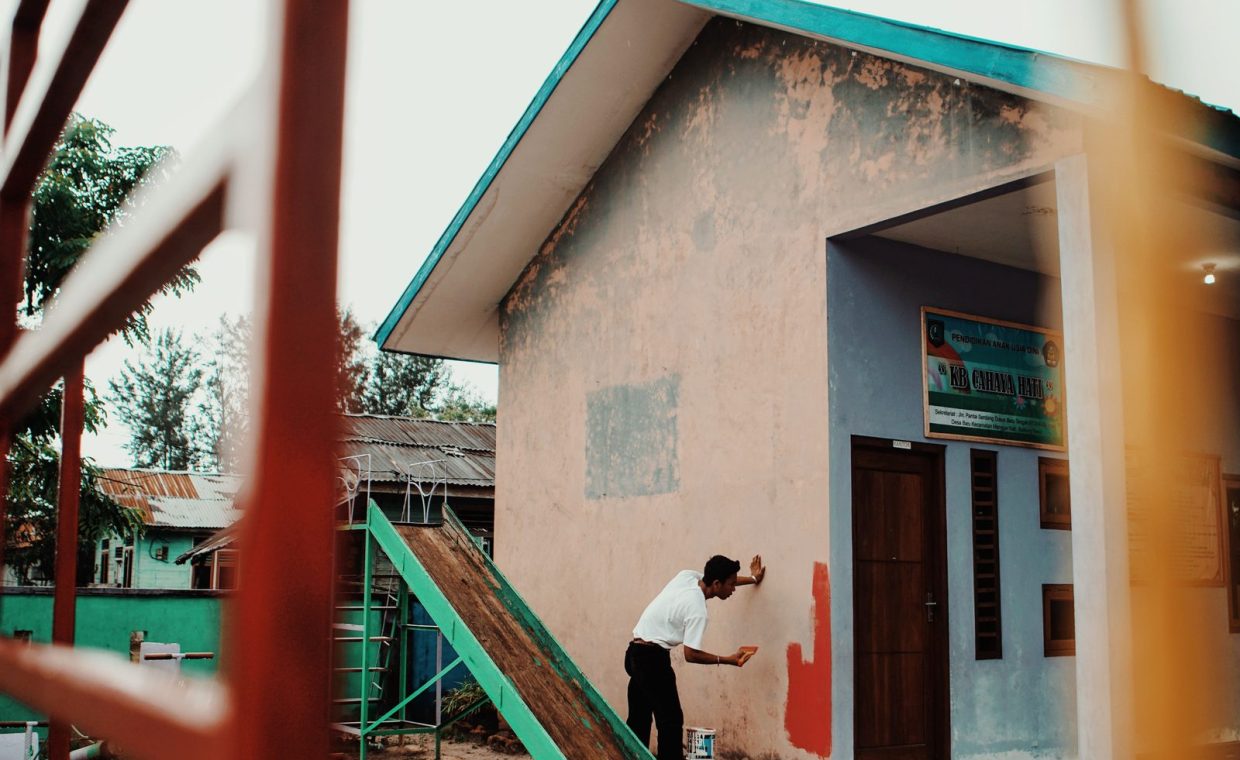
Here is the part the cheap bid skips. Prep is scraping loose paint, sanding rough spots, power washing, caulking gaps, priming bare wood, and masking windows. On an older home, prep can eat 40 to 60 percent of the total labor.
Good prep is invisible when it is done and obvious when it is not. Paint over chalky, peeling siding and you will be repainting in two years instead of ten. That is the corner the $4,200 bid was cutting on my friend's house.
Get the contract to spell out scraping, sanding, washing, caulking, and priming as separate steps. A bid that just says "prep and paint" gives the crew room to do almost nothing. The detailed bid is usually the honest one, even when it costs more.
Typical prep adds:
- Power washing: roughly $200 to $500 for a whole house.
- Scraping and sanding: $500 to $2,000 depending on how much paint is failing.
- Caulking and minor wood repair: $300 to $1,500.
- Priming bare or repaired areas: $0.50 to $1 per square foot of treated surface.
Paint Grade: Where a Few Hundred Dollars Buys Years
Exterior paint runs from builder-grade economy lines to premium acrylics built to flex with the weather. The difference at the register feels small. The difference on the wall plays out over a decade.
A typical home needs 8 to 15 gallons for two coats. Economy paint sits around $25 to $35 a gallon, mid-grade around $40 to $55, and premium $60 to $90. So upgrading the whole job from economy to premium might cost an extra $300 to $600 in material.
That upgrade often buys 4 to 6 more years before the next repaint. When I ran the math, premium paint was cheaper per year of protection on almost every house I looked at. The myth that premium paint is a luxury upsell does not survive a spreadsheet.
If a bid quotes a single coat to look cheap, walk away. One coat over a color change or weathered siding will look blotchy and fail early. Two coats is the standard for a reason, and a real pro will not pretend otherwise.
A Sample Cost Breakdown for a Typical Home
Here is how the pieces stack up on a real-world 2,000-square-foot two-story house in average condition, using mid-grade paint and a reputable crew.
| Line Item | Low | Typical | High |
|---|---|---|---|
| Labor (paint application) | $2,500 | $3,500 | $5,000 |
| Prep (wash, scrape, caulk, prime) | $800 | $1,800 | $3,500 |
| Paint and materials | $400 | $650 | $1,100 |
| Equipment (ladders, lift, masking) | $150 | $400 | $900 |
| Permits (where required) | $0 | $50 | $200 |
| Total | $3,850 | $6,400 | $10,700 |
Most homeowners land in the typical column. The low column assumes good siding and an easy single-story shape. The high column is height, heavy prep, and premium paint stacked together.
What Quietly Moves Your Number Up or Down
Beyond the four big levers, a handful of details swing the final price more than people expect. None of these are hidden fees. They are just things the crew sees on the walk-around that you might not.
- Siding type: smooth lap siding paints fast. Rough stucco, cedar shakes, and deep textures drink paint and slow the roller.
- Color change: going from dark to light (or the reverse) can force an extra coat.
- Trim and detail: shutters, railings, multi-pane windows, and decorative molding are all slow hand-work.
- Accessibility: tight lot lines, landscaping, and steep grades all add ladder time.
- Repairs: rotted fascia or soffit found mid-job becomes carpentry, not painting.
Painting is also a natural moment to handle other exterior work while the crew and ladders are already there. If your trim is failing, your gutters are due for replacement too, and bundling can save a second mobilization fee.
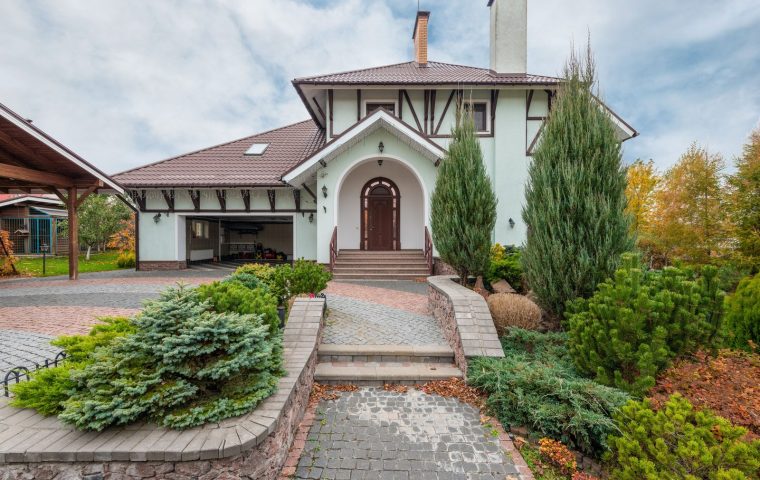
A fresh coat is one of the cheapest ways to lift a home's whole look, which is why it shows up on nearly every curb appeal upgrade shortlist. If you are already reworking the outside, folding paint into a broader backyard makeover budget often makes more sense than treating it as a separate project later.
How long should an exterior paint job last?
With proper prep and quality paint, expect 7 to 10 years on most siding, and longer on protected surfaces. Skimped prep or economy paint can cut that to 3 to 5 years.
Is it cheaper to paint myself?
DIY can save the labor portion, often half the bill, but you take on the prep, the height risk, and the equipment rental. For a single-story home in good shape it can pay off. For two or three stories, the ladder time and safety risk usually justify hiring a crew.
Do I need a permit to paint my house?
Most areas do not require one for standard exterior painting. Historic districts and some HOAs do regulate colors and may charge a small review fee, so check before you buy paint.
If you remember one thing, let it be that the cheapest bid usually hides its savings in the prep line. Ask each painter to itemize labor, prep, paint, and equipment, then compare the prep steps side by side. A fair deal is rarely the lowest number, but it is always the one you do not have to redo in three years.