
Last winter I crawled into an attic in a 1980s split-level where the homeowner was paying close to $400 a month to heat the place. The furnace was fine. The problem was a six-inch gap around the chimney chase, dumping warm air straight into the cold air outside, plus a duct in the crawlspace that had pulled apart at a joint and was heating the dirt under the house. Two afternoons of work and a tube of mastic later, her bills dropped by roughly a third.
I have been doing this kind of work for a long time, and the pattern almost never changes. Folks assume a high bill means they need a new system. Usually it means air is going where it should not, the equipment is not being maintained, or both. The good news is that the cheapest fixes tend to give you the biggest return per dollar.
Here is the order I actually work in, from no-cost habits up to the larger upgrades worth saving for. Do these in sequence and stop wherever the numbers stop making sense for your house.
Find Where Your Money Is Leaking
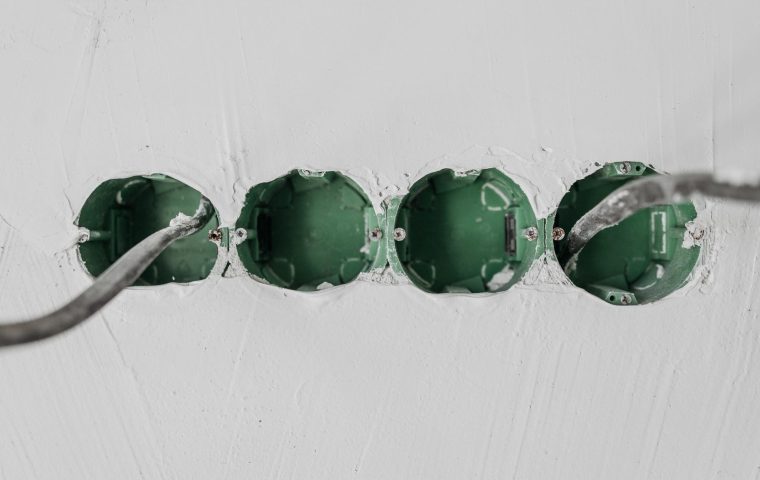
Before you spend a dime on equipment, figure out where the conditioned air is escaping. The biggest culprits in most homes are the attic hatch, recessed lights, the rim joist in the basement, and gaps around plumbing and wiring penetrations. On a windy day, hold a lit incense stick near outlets and trim and watch the smoke pull.
The two heavy hitters are usually the attic and the ductwork. Warm air rises and finds every crack up high, so an unsealed attic acts like a chimney for your heated air all winter. In summer the same gaps let your cooled air drift up and out.
If you want hard numbers, a professional blower-door and duct-leakage test runs roughly $250 to $500 depending on your area. I think it is money well spent on a house with mystery bills, because it tells you exactly where to aim. If your budget is tight, you can do a careful visual pass yourself and catch most of it.
Go into the attic on a cold morning and look for dark, dirty patches in the insulation. That staining is dust filtered out of air leaking up from the house. It marks your leaks better than any gadget.
Seal the Cheap Leaks First
Now plug what you found. A case of caulk, a few cans of low-expansion spray foam, and some weatherstripping will run you about $60 to $150 in materials, and that kit handles the majority of household air leaks.
Hit these in order:
- Weatherstrip and add a sweep to exterior doors.
- Caulk around window trim, baseboards, and where the walls meet the floor on exterior walls.
- Foam the gaps where pipes, wires, and vents pass through the framing.
- Build or buy an insulated cover for the attic hatch and weatherstrip its edge.
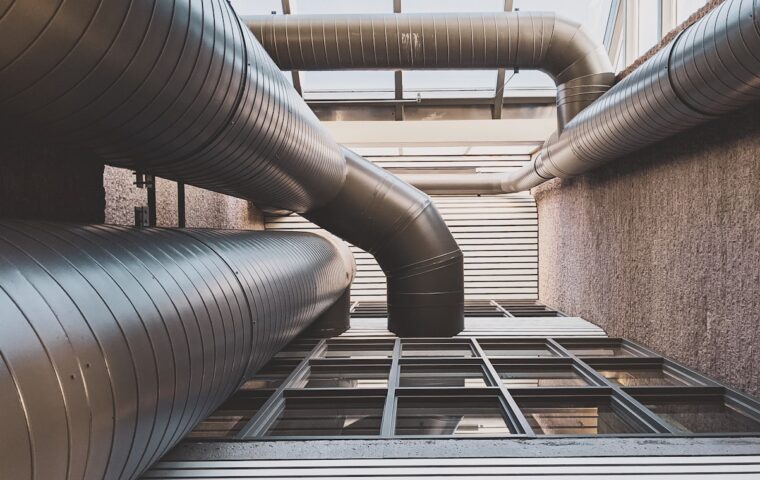
For ducts, forget the cloth-backed stuff labeled duct tape. It dries out and falls off. Use mastic paste or foil tape rated for HVAC, brush or press it over every joint you can reach in the basement, crawlspace, or attic, and pay special attention to where branches connect to the main trunk.
Tune the System You Already Own
A neglected system burns more fuel to do the same work. The single most common thing I see is a filter so clogged the blower is gasping. A dirty filter chokes airflow, drops efficiency, and shortens the life of the equipment.
Change a standard one-inch filter every 60 to 90 days, sooner if you have pets. While you are at it, gently vacuum the outdoor condenser coil fins in spring and clear at least two feet of space around that unit so it can breathe.
An annual professional tune-up typically runs around $90 to $200 and covers refrigerant charge, electrical connections, and a combustion check on a furnace. If you want to know what separates real maintenance from a quick upsell, the patterns in common HVAC maintenance mistakes are worth reading before the tech shows up.
A system low on refrigerant runs constantly and never quite cools. But a tech who wants to add refrigerant without finding the leak is treating a symptom. If a quote leans on vague add-ons, the warning signs in spotting red flags in repair quotes will help you push back.
Put a Smart Thermostat to Work
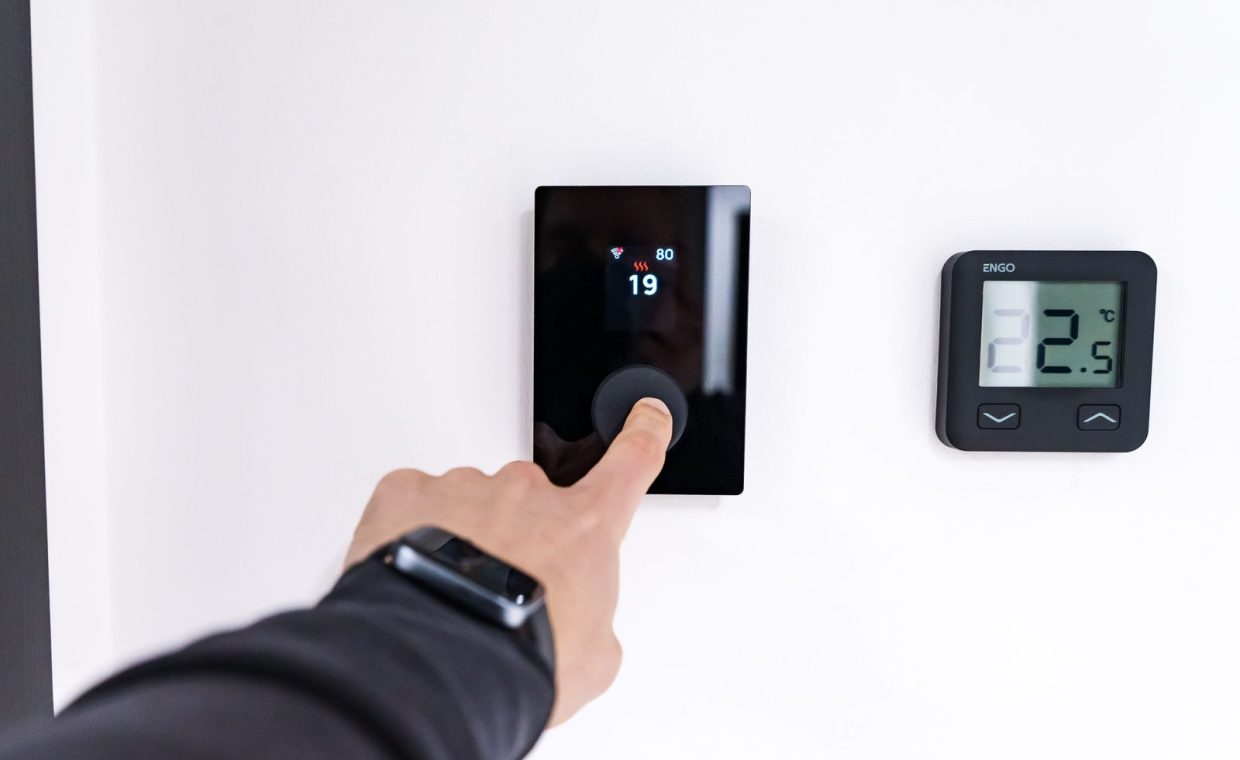
Once the house holds its air better, control matters more. A programmable or smart thermostat costs roughly $25 to $250 installed, and the savings come from not conditioning an empty house. Setting back the temperature about eight degrees for eight hours a day, while you sleep or while everyone is out, is the simplest free reduction you can make.
If you go with a smart model, the wiring needs a common wire (the "C" wire) for steady power. Most furnaces installed in the last fifteen years have one. If yours does not, that is a job for someone comfortable around low-voltage wiring, and it is a different animal from the heavier cost of rewiring a house, so do not let anyone bundle the two.
A note on setbacks and heat pumps
Deep setbacks work great with a gas furnace. With a heat pump, big swings can kick on the expensive backup electric heat strips to catch up. For heat pumps, keep your setbacks modest, around two to three degrees, or use a thermostat that understands the equipment.
Add Insulation Where It Pays Off
Air sealing comes first, but insulation is the next layer. The attic is almost always the best return because heat moves up. Many older homes sit at an R-19 or less, and topping up to the R-49 to R-60 range common in colder climates makes a real, felt difference.
Blown-in cellulose or fiberglass over an existing attic floor typically runs about $1,500 to $3,500 for an average home, materials and labor together. A motivated homeowner can rent a blower and do it for materials alone, often in the $600 to $1,200 range, though it is dusty, itchy work.
Walls and crawlspaces help too, but they cost more per square foot and deliver less than the attic, so I save them for after the easy wins are done.
Before you add attic insulation, make sure bath and kitchen exhaust fans vent all the way outside, not into the attic. Dumping moist air under fresh insulation grows mold and rots the roof deck. I have torn out plenty of attics that were ruined this exact way.
Know When the Equipment Itself Is the Problem
Sometimes the system really is shot. A furnace past 20 years or an AC running on phased-out R-22 refrigerant is a candidate for replacement, especially if repairs are stacking up.
For ballpark planning, a straightforward furnace replacement often lands around $4,000 to $7,000, a central AC swap in a similar range, and a full heat-pump system can run $6,000 to $12,000 or more depending on size and ductwork. Get three written quotes, make sure each one includes a proper load calculation rather than a guess, and do not assume the biggest unit is the best. An oversized system short-cycles, wastes energy, and leaves the house clammy.
Check for utility rebates and federal tax credits on high-efficiency equipment before you sign. Those can knock a meaningful chunk off the price, and a good contractor will already know which ones apply in your area.
Putting It in Order
If you only do three things, seal the air leaks, change the filter and get a tune-up, and program the thermostat. Those cost a few hundred dollars combined and routinely shave real money off a high bill. Insulation and new equipment are bigger swings you take once the basics are handled and you know the foundation is tight.
What single change lowers an HVAC bill the most?
For most high-bill homes it is air sealing and duct sealing. Stopping conditioned air from leaking out of the attic and ducts often cuts more off the bill than any other low-cost step, because your system stops fighting losses it should never have.
How often should I really change my furnace filter?
Every 60 to 90 days for a standard one-inch filter, and closer to monthly if you have shedding pets or run the system hard. A clogged filter chokes airflow, raises energy use, and strains the blower motor.
Is a smart thermostat worth it if my house is leaky?
It helps, but seal the leaks first. A smart thermostat saves by not conditioning an empty or sleeping house, yet those savings shrink if the air you paid to heat or cool is escaping through gaps anyway. Tighten the envelope, then add the controls.
Work this list top to bottom and you will spend the least money where it returns the most. I have watched homeowners cut a brutal bill nearly in half without ever touching the furnace. Grab a tube of caulk and a fresh filter this weekend, and let the house tell you what it needs next.