
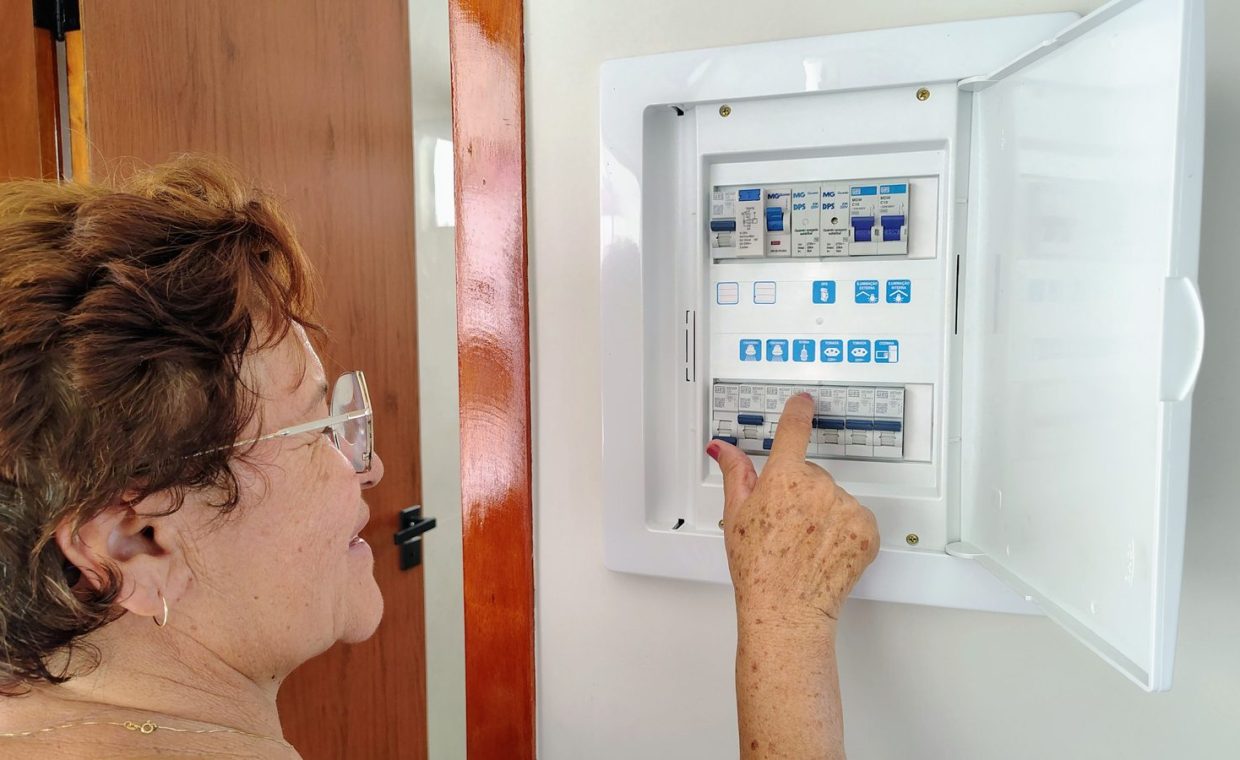
The first sign for the Delgado family was a microwave that dimmed the kitchen lights every time it ran. Then the upstairs window AC started tripping a breaker on hot afternoons. Their 1962 ranch still had its original 100-amp panel, a fuse-style relic with a sticker from a contractor who retired before they were born. When they finally called an electrician, the quote landed at $3,400 to swap it for a 200-amp service.
That number made them flinch, and I get it. A panel upgrade is one of those jobs where you pay a lot and end up with a wall that looks almost identical to before. But I called three suppliers and two licensed electricians to understand where the money actually goes, and the honest answer is that most of the cost is not the box on the wall.
So let me break down what a fair deal looks like, what pushes the price up, and how to tell whether your old panel is genuinely a problem or just old.
What a service upgrade actually means
A "service upgrade" is increasing the amount of electrical current your home can safely pull from the grid at one time. Amps measure that capacity. Going from 100A to 200A roughly doubles the headroom available to your circuits.
Here is the part people miss. The job is not just replacing the breaker panel. It usually includes a new meter base, a thicker service cable, a fresh grounding system, and often coordination with your utility to disconnect and reconnect the line. The panel itself is maybe 15 percent of the bill.
A "panel swap" replaces the breaker box but keeps your existing 100A service. A true "service upgrade" raises capacity to 200A and touches the meter, wire, and grounding too. They are priced very differently, so make sure your quote says which one you are getting.
The cost broken down line by line
When I asked an electrician to itemize a typical 200A upgrade, the structure was consistent across the quotes I gathered. Here is a realistic picture for a standard single-family home with reasonable access.
| Line item | Typical range (USD) | What it covers |
|---|---|---|
| Labor | $1,000 - $2,500 | Crew time, usually a full day for two people |
| Panel and breakers | $300 - $700 | The 200A panel plus new circuit breakers |
| Meter base and service cable | $200 - $600 | New meter housing and heavier-gauge wire |
| Grounding and bonding | $150 - $400 | New ground rods, water-pipe bonding |
| Permit and inspection | $100 - $500 | Local permit plus required electrical inspection |
| Utility disconnect/reconnect | $0 - $400 | Some utilities do this free, others bill it |
Add those up and a straightforward 100A to 200A upgrade usually lands somewhere around $1,800 to $4,500. The Delgados' $3,400 sits right in the meat of that range, which told me their quote was fair before I even saw the details.
One aside from the trade. Permit fees vary wildly by town. I have seen $90 in a rural county and over $450 in a coastal city with strict inspection rules. Always ask whether the permit is included or billed separately, because that single line moves the total more than people expect.
What pushes the price up
The base range assumes an easy job. Plenty of older homes are not easy, and the extras are where a $2,500 quote becomes a $6,000 one.
- Overhead to underground conversion. Burying the service line instead of running it overhead can add $1,500 to $5,000 by itself.
- Mast and weatherhead replacement. If the pipe carrying wire to your roof is rusted or undersized, expect $300 to $1,000 more.
- Aluminum branch wiring. Common in homes from the mid-1960s to mid-1970s, this often needs remediation that adds cost.
- Code-required upgrades. An inspector may require new arc-fault or ground-fault breakers, smoke-detector circuits, or surge protection before signing off.
- Drywall and finish repair. Moving a panel from a closet to an exterior wall can mean patching and painting afterward.
The spread between bids on the same panel job can easily hit $2,000. One electrician I called priced a relocation into the base; another listed it as a $1,800 add-on. Same work, very different presentation. Comparing line items, not just totals, is how you catch padding.
The signs you truly need an upgrade
This is where I want to dispel a common myth. An old panel is not automatically a dangerous panel. Plenty of 100A services run fine for a small home with gas heat and a modest appliance load. Age alone is not a reason to spend thousands.
What does justify an upgrade is real strain or real hazard. Watch for these.
Capacity signs
- Breakers that trip when normal appliances run together
- Lights that dim when the AC, microwave, or dryer kicks on
- No open breaker slots left for a new circuit you need (EV charger, heat pump, hot tub)
Safety signs
- A fuse box instead of breakers, especially with screw-in fuses
- Warm or discolored panel cover, or a burning smell near it
- A panel brand with a known recall history (your electrician can identify these)
If you are seeing the warmth, smell, or scorching, that is not a budgeting question. It belongs on the short list of repairs you should not delay, because an overloaded or failing panel is a fire risk, not an inconvenience. For a fuller checklist, our rundown of electrical upgrade warning signs goes deeper than I can here.
How a panel upgrade compares to other big-ticket home jobs
Homeowners often line up a panel upgrade against other major systems work, and the comparison helps set expectations. A service upgrade is meaningfully cheaper than, say, a full plumbing overhaul. A whole-house repipe commonly runs $4,000 to $15,000, while a panel upgrade tops out far lower for most homes.
The reason is scope. Repiping touches walls throughout the house. A panel upgrade is concentrated work in one spot plus the service connection. That focus is also why the labor estimate is usually a single day, not a week.
If an electrician offers to do the job cheaper "without pulling a permit," walk away. Unpermitted electrical work can void your homeowners insurance, fail at resale, and skip the inspection that exists to keep your house from burning down. The permit is the cheap part. Do not let anyone talk you out of it.
How to keep the cost reasonable
A few moves genuinely lower what you pay, and none of them involve cutting corners on safety.
Bundle the work. If you are already planning to add an EV charger or a heat-pump circuit, doing it during the panel upgrade saves a second service call. Clear the area around the panel before the crew arrives so you are not paying labor time for them to move your storage shelves.
Ask whether your utility offers a free disconnect, since that detail alone can shave a few hundred dollars. And get the bids in writing with line items, so the apples-to-apples comparison is yours to make, not the salesperson's.
Does upgrading to 200A lower my electric bill?
No. Amperage is capacity, not consumption. A 200A panel does not pull more or less power on its own. Your bill reflects what your appliances actually use, so an upgrade adds headroom and safety, not savings.
How long does the work take?
The hands-on electrical work is usually one full day for a two-person crew. Add time for the utility to disconnect and reconnect power, plus the inspection, which can stretch the calendar to a few days even though active labor is short.
Can I do a panel upgrade myself to save money?
In most places, no. Service upgrades involve the utility connection and require a licensed electrician plus a permit and inspection. Even where DIY is technically allowed, the risk of a wiring mistake at this scale is not worth the labor savings.
The Delgados went ahead with their $3,400 upgrade, and the dimming-light problem vanished the same afternoon. If your panel is just old but quiet, you may not need to spend a dime yet. If it is warm, scorched, or constantly tripping, get a licensed electrician out this week and treat the quote as the price of a house that does not catch fire. That is money well spent.