
A neighbor of mine called an HVAC tech last August because her central air had stopped cooling on the hottest week of the year. The diagnosis took ten minutes: a filter so clogged it had collapsed inward, choking airflow until the coil iced over and the compressor strained itself into an early grave. The repair quote was roughly $1,600 for a new compressor, on a unit that was only nine years old.
That filter cost about $14. I keep thinking about that ratio, because it is the whole story of HVAC ownership in one ugly example. Most of what shortens a system's life is not bad luck or a lemon unit. It is small neglect, repeated, until something expensive breaks.
I called a few supply houses and two independent techs to figure out which habits actually move the needle. Below are the seven mistakes that age systems fastest, why each one costs you, and the fix that usually runs less than a tank of gas.
Letting the air filter turn into a felt blanket
A dirty filter is the single most common reason systems fail early. When airflow drops, your blower works harder, the evaporator coil can freeze, and in winter a furnace can overheat and trip its limit switch over and over.
None of that is dramatic on day one. It is slow strangulation, and it shows up as a compressor or blower motor that dies years ahead of schedule.
The fix is almost insultingly cheap. Standard 1-inch pleated filters run about $8 to $20 each, and you want a fresh one every 30 to 90 days depending on pets and dust. Buy a six-pack, write the swap date on the cardboard edge with a marker, and you are done.
If you hold the filter up to a light and cannot see the bulb through it, it was due two months ago. A higher MERV rating is not always better either. Anything above MERV 13 can restrict airflow on older blowers, so check what your system is rated for first.
Skipping the annual tune-up to save a hundred bucks
I understand the temptation. A service visit feels like paying for nothing when the unit is running fine. But a tune-up is where a tech catches the small stuff: a low refrigerant charge, a weak capacitor, a corroded contactor, a drain line about to clog.
Each of those is cheap to fix early and brutal to fix late. A failing capacitor is a $150 to $400 part swap. Ignore it and the compressor it protects becomes a $1,500 to $2,800 replacement.
A standard maintenance visit runs roughly $80 to $200 for a single system, or you can buy a yearly plan from a local company for around $150 to $300 that covers two visits (one for cooling, one for heating). That plan often comes with priority scheduling in a heat wave, which has real value when every house on the block is calling the same three companies.
Closing vents in unused rooms
This one feels logical, which is why so many people do it. You shut the registers in the guest room and the basement to "save energy." In reality, your system is sized to move a set volume of air, and closing vents does not reduce its workload. It raises static pressure in the ductwork.
That extra pressure stresses the blower, forces air through duct leaks, and on some systems can push the coil toward freezing again. You are not saving money. You are quietly aging the most expensive components.
The fix costs nothing: open the vents back up. If certain rooms are genuinely too hot or too cold, that is a balancing or zoning conversation with a tech, not a job for the register lever.
Ignoring the condensate drain line
Your air conditioner pulls humidity out of the air, and that water has to go somewhere. It runs through a small PVC drain line that, over a season, grows algae and sludge. When that line clogs, water backs up.
Best case, a float switch shuts the system off and you lose cooling for a day. Worst case, there is no float switch and water overflows the drain pan into your ceiling or onto the furnace below. I have seen a clogged $0 drain line turn into a $3,000 drywall and electronics repair.
Once a month in cooling season, pour a cup of distilled white vinegar down the drain access port near the indoor unit. It keeps the line clear for the price of a salad dressing ingredient. A wet/dry vacuum on the outdoor end clears a clog that already formed.
Treating the outdoor unit like a piece of yard furniture
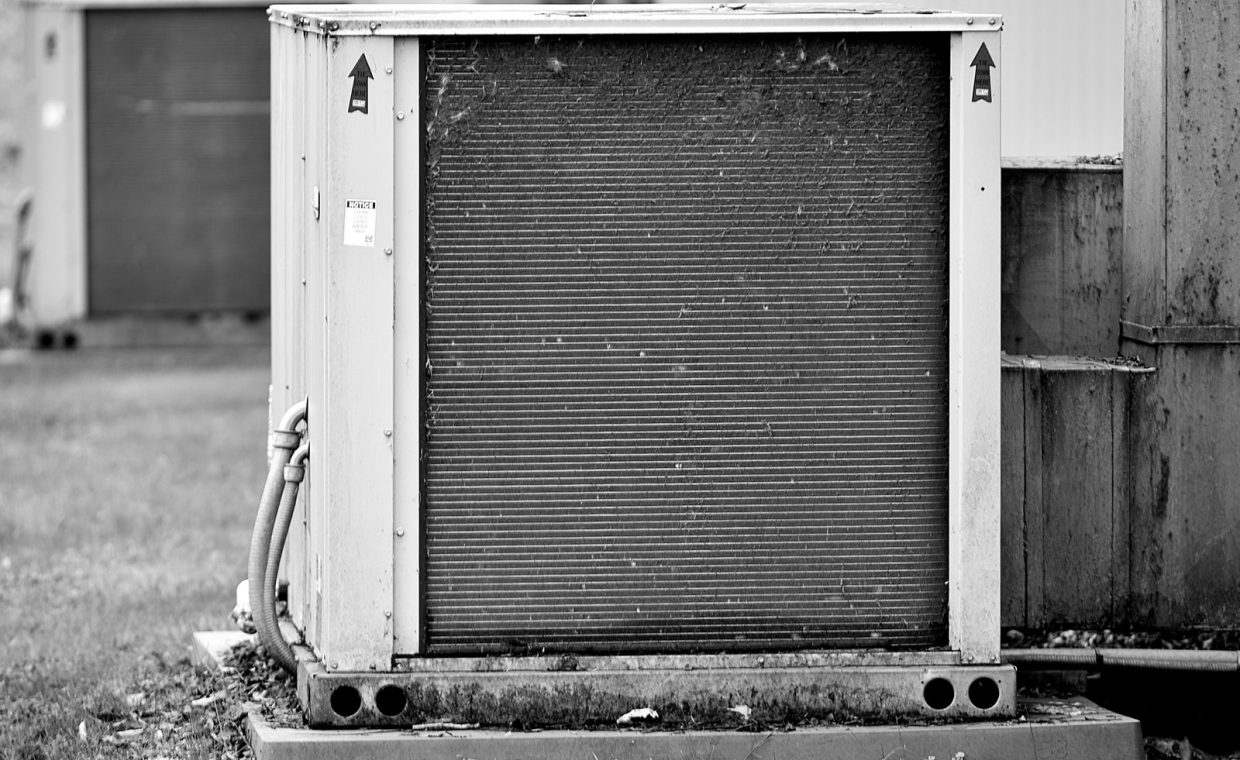
The condenser outside needs to dump heat, and it cannot do that buried in grass clippings, cottonwood fluff, and shrubbery. When the coil fins are caked or the unit has no breathing room, the system runs hotter and longer to hit the same temperature.
Hotter and longer is exactly what kills compressors. It also spikes your electric bill, so you pay twice.
The cheap maintenance routine
Keep at least two feet of clearance on all sides. Once a year, with the power off at the disconnect, gently rinse the coil fins from the inside out with a regular garden hose (not a pressure washer, which bends the delicate fins). A bent-fin comb costs about $10 if you need to straighten any.
If you are weighing whether an aging, neglected unit is even worth saving, that is a separate math problem. A full heat pump replacement cost runs into the thousands, so it usually pays to maintain a healthy system rather than coast it into the ground.
Cranking the thermostat to extremes
Walking into a 82-degree house and setting the thermostat to 65 does not cool the place faster. Your system runs at one speed (unless it is a variable-speed unit), so all you have done is guarantee it runs flat out for a long stretch, then likely overshoots.
Constant deep setbacks and aggressive overrides mean more run time and more start-stop cycling, both of which add wear. A programmable or smart thermostat, around $25 to $250 installed, lets the system ease the house up or down on a schedule instead of slamming it.
The wiring side matters too. If your thermostat behaves erratically, the culprit is sometimes old or corroded low-voltage wiring rather than the unit itself. That is usually a minor fix, nothing like the scope of a project to rewire a whole house, but it is worth ruling out before you assume the HVAC is failing.
Putting off small repairs until they cascade
HVAC failures love company. A worn capacitor strains the compressor. A weak compressor runs hot and degrades the refrigerant oil. Low refrigerant from an unaddressed leak makes everything run harder. One ignored $200 part can chain into a $4,000 system replacement.
This is the same logic homeowners use on a leaky window, where a $300 reseal beats a $900 unit swap if you act early. If you have wrestled with the repair versus replacement decision on a window, you already understand the instinct: fix the cheap thing now so it never becomes the expensive thing.
Filters, drain lines, coil rinsing, and clearance are fair game for an owner. Refrigerant, electrical components, and anything sealed are not. Refrigerant handling is federally regulated, and a wrong move on a charged system is dangerous. Know the line between maintenance and repair.
A rough budget for staying ahead
- Filters: roughly $50 to $120 a year
- Annual professional tune-up or plan: around $150 to $300
- Vinegar, hose, fin comb, basic supplies: under $30 total
Call it $250 to $450 a year to protect a system that costs thousands to replace and is supposed to last 15 to 20 years. That is a deal I would take every time.
How often should I really change my HVAC filter?
Every 30 to 90 days for a standard 1-inch pleated filter. Lean toward 30 if you have pets, allergies, or run the system constantly, and lean toward 90 for a low-traffic home with no shedding animals.
Is an annual maintenance plan worth the money?
For most owners, yes. At roughly $150 to $300 a year, a plan that catches a failing capacitor or low charge early easily pays for itself by preventing a four-figure compressor failure, and the priority scheduling matters during a heat wave.
Can closing vents in unused rooms damage my system?
It can. Your system is sized for a set airflow, so closing registers raises duct pressure, strains the blower, and can push the coil toward freezing. Leave vents open and ask a tech about zoning if some rooms need different temperatures.
None of this requires a wrench drawer or a weekend. It is a marked-up filter pack, a yearly phone call, and a cup of vinegar now and then. Do that handful of cheap things and your system tends to run its full life instead of dying a thousand small deaths. I would rather spend $14 on time than $1,600 in a panic, and after watching my neighbor's August, so would she.