
Three days after an ice storm, I got a call from a homeowner standing in his garage next to a cooler full of thawing steaks. His neighbor two doors down was running a portable off a couple of extension cords. He wanted to know why the neighbor had lights and he had a dark house and a freezer bleeding money.
Backup power is not one product. It is two very different products at two very different prices, and most people do not learn the difference until the power is out.
I have set a dozen standby units and wired in more transfer switches than I can count. Here is what these things really cost in 2026, where the money actually goes, and which one I would put in for which house.
The Two Real Choices
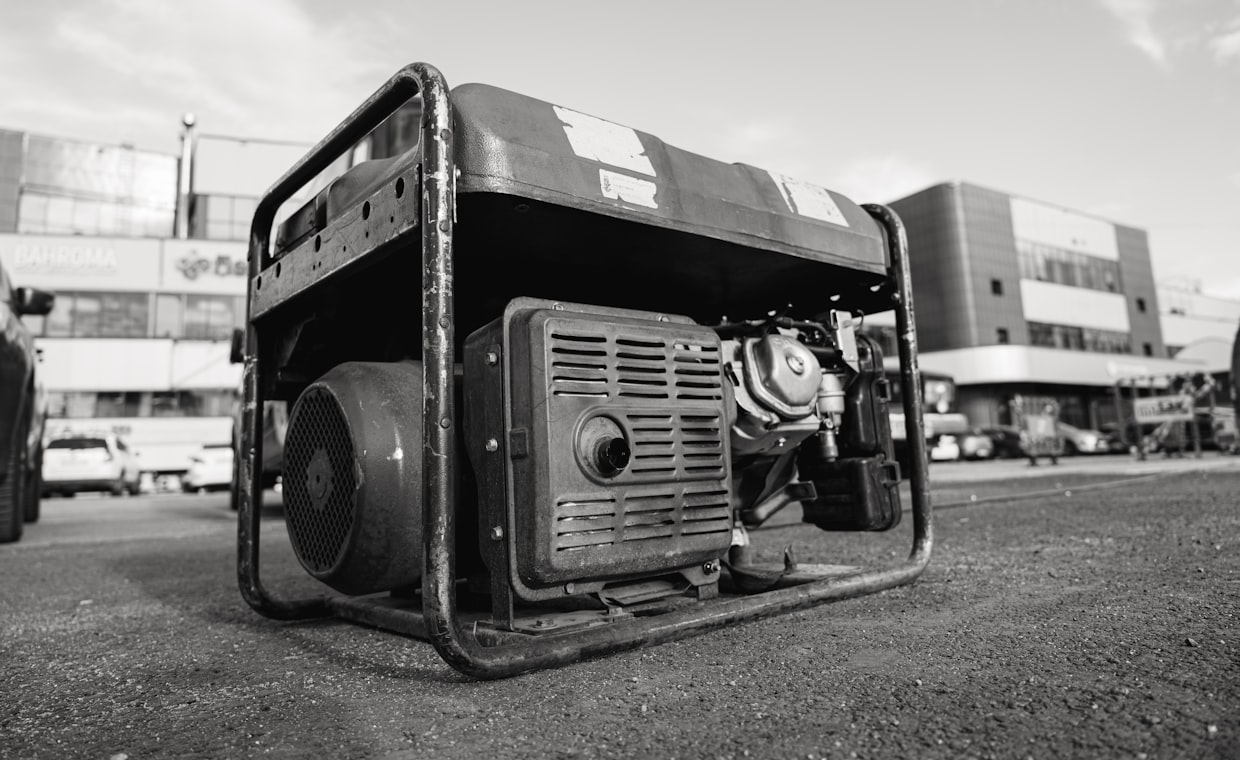
On one end you have a large portable or inverter generator. You roll it out, fill it with gas, and run cords or plug it into an inlet on the wall. It powers what you tell it to, often one appliance at a time.
On the other end you have a permanent standby generator. It sits on a pad outside like a central AC condenser, runs on natural gas or propane, and kicks on by itself about thirty seconds after the utility drops. You are asleep. You never touch it.
The portable is a tool. The standby is a system wired into your house, and that is where the price gap comes from.
Side by Side: Portable vs Standby
Look at the two options next to each other. These are realistic 2026 US ranges for the equipment and typical work.
| Factor | Large Portable / Inverter | Permanent Standby |
|---|---|---|
| Equipment cost | $700-$2,000 | $3,000-$6,000 (unit only) |
| Fully installed | $700-$2,500 | $8,000-$16,000 |
| Coverage | A few key circuits, one at a time | Whole house or selected essentials, automatic |
| Fuel | Gasoline (refill by hand) | Natural gas or propane (never refuel) |
| Transfer switch | Manual inlet or none | Automatic, hands off |
| Install effort | You, an afternoon | Electrician, plumber, permit, inspection |
| Noise | Loud, 60-70 dB, right there in the yard | Quieter, enclosed, further from the house |
The portable wins on upfront cost by a mile. The standby wins on everything you care about at 2 a.m. during a blackout. Now, why the installed standby number lands where it does.
What a Standby Generator Actually Costs Installed
People see a $4,000 generator at the home center and assume the job is a little more than that. It is not. The unit is often less than half the total.
The generator itself: $3,000-$6,000
An air cooled home standby in the 18kW to 26kW range covers most houses, including central AC. Go bigger, liquid cooled, and you are past $6,000 fast. Smaller essentials only units start lower.
Automatic transfer switch: $500-$1,500
This is the brain. It watches the utility, starts the generator, and flips your house over to backup power without you lifting a finger.
Electrician labor: $1,500-$4,000
This is the line item people underestimate. Setting the switch, running the wire, tying into your main, load calculations, and passing inspection is real skilled work. If your service is old or maxed out, you may need a panel upgrade on top.
Gas or propane hookup: $800-$2,500
Natural gas means a plumber runs a new line from your meter and confirms it can deliver enough volume. Propane means a tank, or a bigger one, plus the line. Long runs and buried pipe push this higher.
Concrete pad: $300-$1,000
The unit needs a level, stable base, poured or composite. Simple in a flat side yard, more expensive if we have to build up grade or haul the unit around the house.
Permit and inspection: $100-$500
Almost every jurisdiction requires an electrical permit, and often a gas permit too. Skip it and you risk your insurance and your resale. Pay it and sleep easier.
Unit plus switch plus labor plus fuel plus pad plus permit lands most whole house standby jobs between $8,000 and $16,000. A simple install near the meter sits at the low end. A big unit, long gas run, and a service upgrade pushes the top.
Where the Portable Still Makes Sense
I am not anti portable. For a lot of houses it is the smart money. If you lose power twice a year for a few hours, twelve grand to skip rolling out a generator is hard to justify.
A good move is a portable paired with a manual transfer switch or an inlet box. That install runs a few hundred dollars and lets you power real circuits safely, no extension cords under the door.
The Line Items That Surprise People
Every honest quote has costs that are not on the sticker, the ones that make homeowners flinch.
Gas volume is the big one. Your existing meter may not push enough for a large generator plus the furnace and water heater it already feeds. Upgrading it is a utility job that takes time.
Old wiring is the other. Aging cloth or aluminum branch circuits can surface during the load calc and inspection. It does not mean you need full rewiring costs on the spot, but it can mean corrective work before anyone signs off.
Which Wins for Whom
Here is how I advise people on the jobsite, no sales pitch.
Buy the portable if outages are rare and short, your budget is tight, and you mostly need to save the fridge and run a few lights. Pair it with an inlet box and you have covered the real emergencies for a couple thousand dollars.
Buy the standby if you lose power often or for days, if you have well water, medical equipment, or a finished basement that floods, or if you travel and cannot be home to run a machine. It also earns its keep in a house you plan to sell.
Cutting the Cost Without Cutting Corners
You can shrink a standby bill without buying junk. Size the unit to essentials instead of the whole house, and put the pad close to both the electrical panel and the gas meter so the runs stay short. Efficiency steps that lower energy bills also mean a smaller generator can carry your real load. Less demand, smaller unit, lower price.
How long does a standby generator installation take?
The physical install is usually one to three days once materials are on site. The bigger delay is permits and any gas meter upgrade from the utility, which can stretch the whole project to a few weeks.
Can a portable generator power my whole house?
Not comfortably. A large portable can run essentials like a fridge, furnace blower, and some lights through an inlet box, but it will not carry central AC and everything else at once the way a properly sized standby does.
Do I really need an automatic transfer switch?
For a standby, yes, it is required and it is what makes the system automatic and safe. For a portable, you need at least a manual transfer switch or inlet box. Never backfeed a house without one.
Backup power is one of those jobs where the honest answer is "it depends on your house." Price both paths against how often your power fails and what you cannot afford to lose. Get two or three real quotes, make sure a permit is in the number, and do not let anyone talk you out of the transfer switch. Stay warm, keep the freezer humming, and call a licensed pro for the hookup.