
The morning my neighbor's 12-year-old tank water heater let go, it dumped about 50 gallons across her basement floor before anyone noticed. The unit itself was dead, the drywall was soaked, and she had a plumber, a restoration crew, and a very bad Tuesday on her hands. That is the moment most people actually shop for a water heater, which is the worst possible time to make a smart financial decision.
So I did the homework she did not have time for. I called three suppliers, read two install contracts line by line, and pulled real quotes for both a standard tank replacement and a tankless conversion. The sticker prices tell one story. The 15-year cost tells a very different one.
Here is what a fair deal actually looks like when your heater is on its last legs and you are deciding between the two.
The Two Options, Framed Honestly
A storage tank heater keeps 40 to 80 gallons hot around the clock, ready whenever you open a tap. It is cheap to buy, dead simple to install, and the technology has not really changed in decades. The tradeoff is that it reheats water all day whether you use it or not, and one day the tank rusts through and floods.
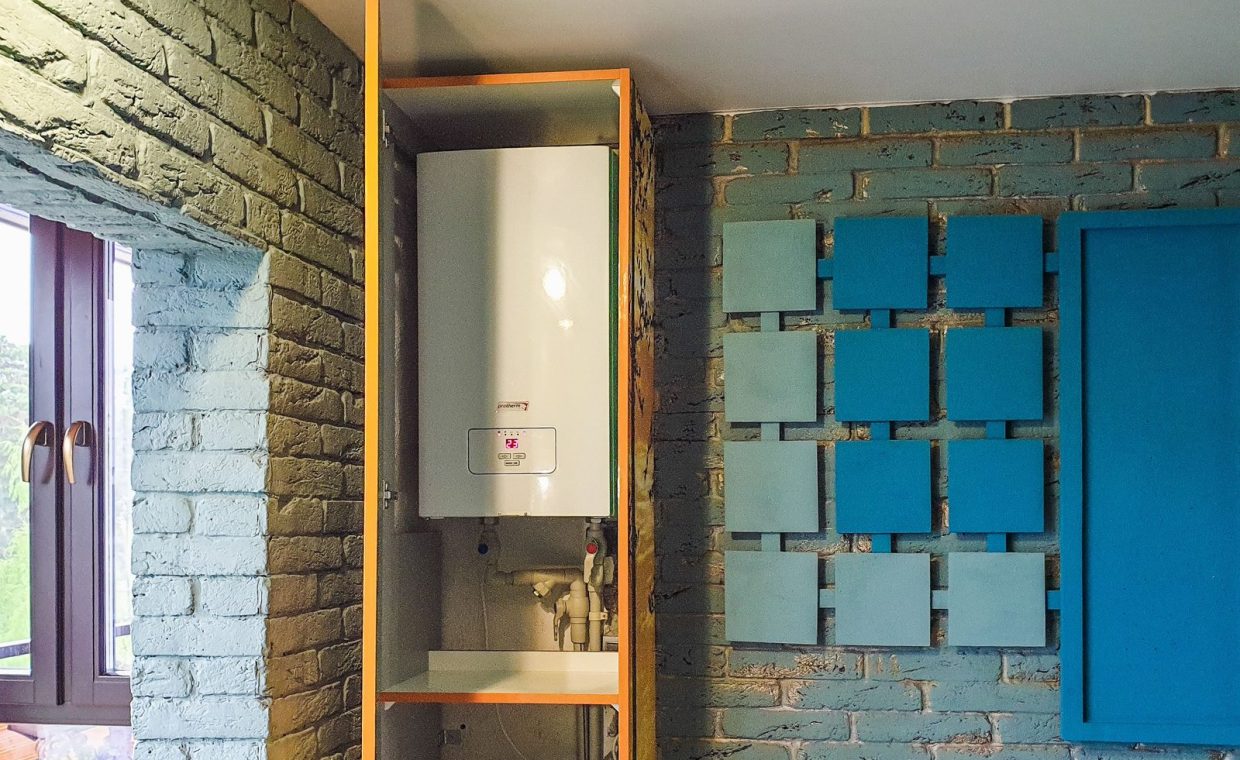
A tankless (on-demand) heater heats water only as it flows through, so you never run out and you waste no energy keeping a tank warm. The catch is a higher purchase price, a more involved install, and in many homes an upgrade to the gas line or electrical service before it will even run.
The appliance price is the easy part. What blows up tankless quotes is the supporting work: new venting, a bigger gas line, or a beefier electric panel. That is where two homes with identical heaters end up with quotes $1,500 apart.
What You Pay Up Front
Let me break the upfront numbers into line items, because "a water heater costs $X" hides where the money actually goes.
Tank replacement
- Unit: roughly $400 to $900 for a 40-50 gallon gas or electric model.
- Labor: typically around $400 to $800 for a straight swap.
- Permit and disposal: often $50 to $200 depending on your municipality.
All in, a like-for-like tank replacement usually lands between $1,000 and $1,800. If your old setup is already up to code, this is about as boring and predictable as home repair gets.
Tankless conversion
- Unit: roughly $700 to $1,500 for a quality gas unit, more for high-output electric.
- Labor: typically around $800 to $1,800, since it takes longer and often needs a specialist.
- Gas line upsizing or venting: commonly $500 to $1,200 if your existing line is too small.
- Electrical work: an electric tankless can demand a serious circuit, and that may push you toward an electrical panel upgrade if your service is already maxed out.
- Permit: often $100 to $300.
A first-time tankless install commonly runs $2,500 to $4,500, and I have seen quotes touch $6,000 when a panel or gas line has to be rebuilt. One plumber told me flatly: "If your house was not designed for it, half the bill is just getting the house ready."
The Comparison That Actually Matters
Upfront cost is only one row. Here is how the two stack up across the things that hit your wallet over the life of the unit.
| Factor | Tank | Tankless |
|---|---|---|
| Upfront cost (installed) | $1,000 - $1,800 | $2,500 - $4,500 |
| Lifespan | 8 - 12 years | 15 - 20 years |
| Annual energy | Higher (standby loss) | Lower (10-30% less typical) |
| Upkeep | Flush yearly, low effort | Descale yearly, more critical |
| Failure risk | Tank can flood when it fails | Rarely floods, electronic faults instead |
| Hot water supply | Runs out, then recovers | Endless, but flow-rate limited |
The 15-Year Math
This is where the honest comparison lives. A tank costs less today but you may buy two of them in the time one tankless unit lasts. Stack the second replacement on top, add the energy difference, and the gap narrows fast.
Run a rough 15-year picture. A tank path might be one $1,400 install now, a second $1,600 install around year 10, plus higher energy along the way, call it $300 a year. That is roughly $7,500 over 15 years. A tankless path might be one $3,500 install, lower energy around $230 a year, and a descaling habit, landing near $7,000.
The two paths end up close. Tankless usually wins the long game, but the margin is smaller than the marketing suggests, and it only works if you stay in the home long enough to collect the savings.
Tankless pays off when you plan to stay put 12-plus years and your home already has the gas or electric capacity. If you are moving in five, or you would need a panel upgrade just to power it, a tank is the smarter spend.
What Drives the Price Up or Down
The quote you get depends less on the heater and more on your house. A few things move the number more than anything else.
- Hard water: mineral buildup shortens both types but punishes tankless. Skip the yearly descale and you can void the warranty and kill the unit early.
- Gas capacity: a tankless needs a strong gas supply. Undersized line equals a pricey upgrade.
- Electric service: whole-home electric tankless units pull serious amperage and often force panel work.
- Sizing: buy too small and you get cold showers; too big and you overpay. Getting capacity right matters here the same way it does in an HVAC sizing decision, where guessing costs you for years.
And do not forget collateral damage. When a tank fails the way my neighbor's did, the real bill is not the $1,400 heater, it is the drywall repair and flooring that came after. A drain pan and a leak sensor are cheap insurance against that.
If a tankless bid looks suspiciously cheap, check whether it includes venting, gas-line work, and a permit. A bid that "forgets" those is not a deal, it is a change order waiting to happen once the crew is already in your basement.
The Verdict: Who Wins
For most people replacing a worn-out heater on short notice, in a home that already had a tank, the tank wins on practicality. It is cheaper, faster to install, and you are back to hot showers the same day without rewiring anything.
Tankless wins for the long-haul homeowner who plans to stay a decade or more, has the gas or electric capacity already, and wants endless hot water plus a lower energy bill. If your house is wired and piped for it, the lifetime cost roughly matches the tank while you get a longer-lived, more efficient unit.
The wrong move is paying $4,000 for tankless when you are selling in three years, or grabbing the cheapest tank when you just dropped real money making the house tankless-ready. Match the heater to how long you will own the house, not to the brochure.
Is tankless really worth the extra money?
Only if you stay long enough to recover the higher install through energy savings and a longer lifespan, usually 12-plus years, and only if your home does not need a major gas or electrical upgrade to run it.
How long does each type actually last?
A storage tank typically lasts 8 to 12 years before it rusts through. A well-maintained tankless commonly runs 15 to 20 years, but it depends heavily on yearly descaling, especially in hard-water areas.
Why are tankless install quotes so far apart?
Because the appliance is the small part. Gas-line upsizing, new venting, permits, and a possible electrical panel upgrade can add $1,000 to $2,500, so two identical heaters get wildly different bills based on the house.
If your heater is limping along but not dead yet, you have the one luxury my neighbor did not: time to get two real quotes and read what is actually in them. Price the tank swap, price the tankless conversion with all the prep work listed out, and pick based on how long you are staying. That is how you avoid both the flooded basement and the overpriced upgrade.