
The first crack in my own driveway looked harmless, a hairline running from the garage apron toward the street. Two winters later it was a web of fissures wide enough to swallow a tape measure, and the patching I kept doing was money thrown into a hole that only got bigger. That is the moment most homeowners face: stop bandaging and replace the whole thing.
The replacement question almost always narrows to two materials, asphalt and concrete. They sit at different price points, age in different ways, and ask different things of you over the years. A typical two-car driveway, roughly 600 square feet, runs anywhere from about $3,600 on the low end to north of $12,000 depending on which material you pick and what your site demands.
I have specced both for clients and lived with both at home, so let me walk you through where each one earns its keep and where it quietly costs you more than the quote suggested.
What you are actually paying for
A driveway quote bundles three things: materials, labor, and site prep. The headline price per square foot hides how much each one varies, so it helps to break a real project apart.
For asphalt, expect roughly $7 to $13 per square foot installed. On that 600 square foot driveway, that lands somewhere around $4,200 to $7,800. Concrete runs higher, roughly $8 to $18 per square foot, or about $4,800 to $10,800 for the same footprint. Decorative concrete (stamped, colored, or exposed aggregate) pushes the top of that range well past $15,000.
Here is how a mid-range project tends to split out:
- Materials: 30 to 45 percent of the total. Asphalt prices ride oil markets, so quotes can swing season to season.
- Labor: 40 to 55 percent. Concrete is more labor-intensive to form, pour, and finish, which is a big reason it costs more.
- Site prep and removal: 10 to 20 percent. Tearing out the old slab, regrading, and building a proper gravel base. Skimp here and nothing else matters.
- Permits: often $50 to $500 where required, more if you are changing the apron at the street.
Most premature failures I see trace back to a thin or poorly compacted base, not the surface material. A solid 6 to 8 inch gravel base costs a little more up front and saves you a full replacement down the road. Ask any bidder to spell out the base depth in writing.
Asphalt vs concrete, side by side
Numbers in a paragraph blur together, so here is the comparison laid out plainly. Treat the figures as illustrative market ranges for a standard residential driveway, not a quote.
| Factor | Asphalt | Concrete |
|---|---|---|
| Installed cost (600 sq ft) | ~$4,200 to $7,800 | ~$4,800 to $10,800 |
| Typical lifespan | 15 to 20 years | 25 to 40 years |
| Upkeep | Seal every 2 to 4 years, ~$150 to $400 each time | Seal every 4 to 6 years, ~$100 to $300, optional |
| Repair ease | Easy and cheap, patches blend in | Harder, patches show as a different shade |
| Cold climate | Flexes with frost, handles freeze-thaw well | Can crack and spall if not poured right |
| Hot climate | Softens, can rut in extreme heat | Stays firm, stays cooler underfoot |
| Cure time before use | 2 to 3 days | 7 days to walk, ~28 days for full strength |
| Main risk | Shorter life, ongoing sealing | Higher upfront cost, cracks are permanent |
Read that table and a pattern jumps out. Asphalt asks less of your wallet today but more of your attention forever. Concrete reverses the deal: a bigger check now, then years of leaving it alone.
Lifespan is where the real cost hides
A cheaper driveway that you replace twice is not cheaper. This is the math most quotes never show you.
Say asphalt costs you $6,000 and lasts 18 years. Concrete costs $9,000 and lasts 35. Over a 35 year window, the asphalt gets replaced once more (another $6,000 or more, likely higher with inflation) plus a decade of seal coats. The concrete just sits there. Stretched across the years you own the home, concrete often pulls even or comes out ahead.
That said, lifespan only holds if the install is honest. Asphalt laid too thin or concrete poured without control joints will both fail early, and then the math collapses. I have seen a beautiful concrete pour crack in its first winter because nobody cut the joints deep enough.
Driveways are one of the better outdoor spends for resale because buyers see them before they ever reach the front door. They rarely top the charts on their own, but curb appeal projects compound. If you are weighing where outdoor money goes furthest, our breakdown of landscaping projects ranked by ROI puts a fresh driveway in context against plantings, lighting, and hardscape.
Climate should make part of the decision for you
Where you live narrows the field more than personal taste does.
Cold and freeze-thaw regions
Asphalt flexes. As the ground heaves and settles through winter, a black driveway moves with it and tends to forgive. Concrete is rigid, so freeze-thaw cycles and the salt you spread for traction can cause surface spalling, that flaky pitting that ruins the look. Concrete still works in the north, but it needs air-entrained mix and a contractor who respects control joints.
Hot southern regions
Flip the logic. In sustained heat asphalt softens, and a heavy vehicle or a kickstand can leave a dent. Concrete stays firm and reflects heat instead of absorbing it, so it is cooler to walk on barefoot and holds up better under a relentless sun. Across much of the Sun Belt, concrete is the default for good reason.
Upkeep, the cost nobody quotes
The sticker price is a one-time event. Maintenance is the slow drip that runs for decades.
Asphalt needs sealcoating every two to four years to stay flexible and waterproof. Budget roughly $150 to $400 per application if you hire it out, less if you do it yourself with a weekend and a squeegee. Skip it and the surface dries, cracks, and the lifespan in that table shrinks fast.
Concrete is far more forgiving. Sealing every four to six years helps resist stains and freeze damage, but plenty of concrete driveways go unsealed and still last decades. The trade-off is repairs: when concrete does crack, the patch never quite matches, while an asphalt patch melts into the surface and disappears.
Standing water is the enemy of both materials. Before you sign anything, confirm the grade pushes water away from your foundation and garage. A driveway that pools water near the house can turn into a much pricier problem than the pavement itself, the same way deferred roof issues snowball when water finds a path inside.
So which one wins?
There is no single answer, but the decision is cleaner than it looks once you know your priorities.
Choose asphalt if you want the lowest upfront cost, you live somewhere with hard winters, or you plan to move within a decade and do not want to overspend on a feature the next owner inherits. It is also the friendlier choice if you like the idea of cheap, invisible repairs.
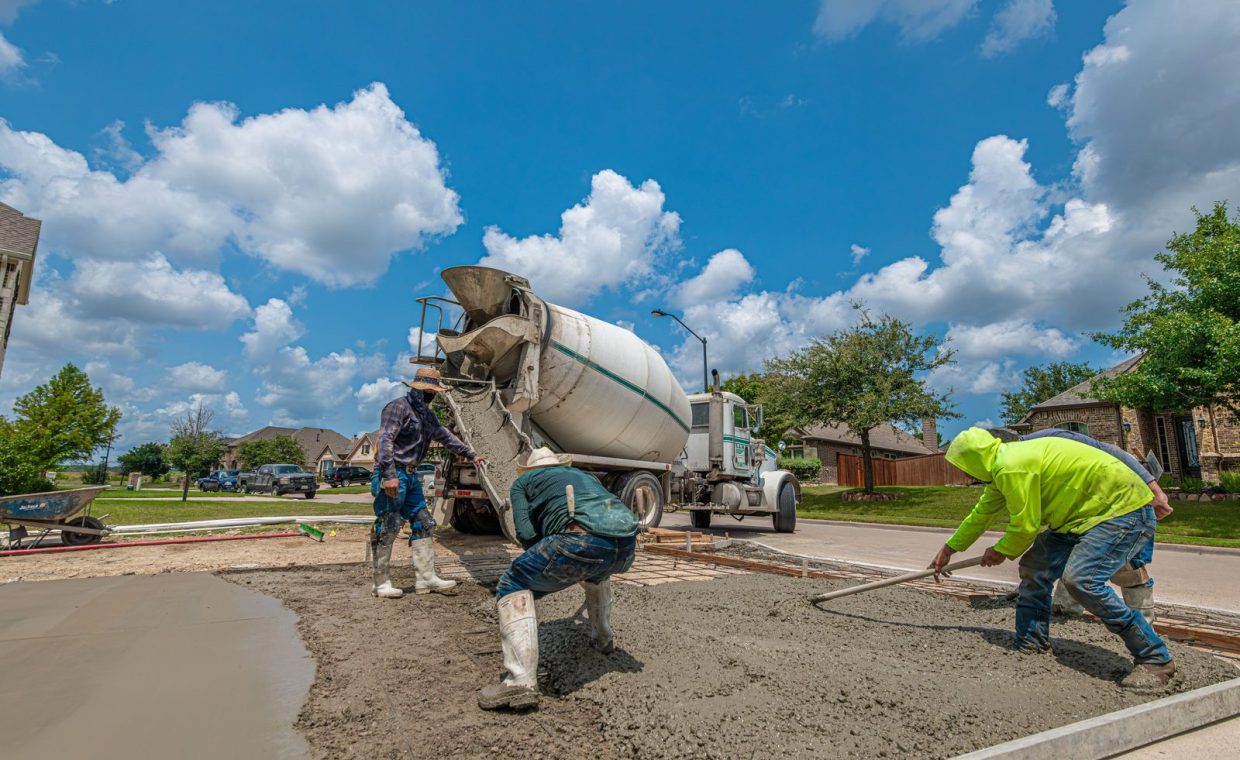
Choose concrete if you are staying put, you live in a hot or mild climate, and you would rather pay once and forget about maintenance for twenty-plus years. It is also the obvious pick if you want decorative finishes that lift the whole front of the house.
If your driveway is part of a larger refresh, sequence it with the rest of the yard so you are not tearing up new work later. I usually fold it into a single plan alongside the softscape, and our backyard makeover budget guide shows how to phase outdoor projects so the dollars land in the right order.
Can I pour concrete over an old asphalt driveway?
It is not recommended. The two materials move differently, so concrete poured over asphalt tends to crack as the base shifts underneath. Tear out the old surface and build a proper base instead. It costs more now but it is the only version that lasts.
How long before I can park on a new driveway?
Asphalt is usually drivable in two to three days once it has cooled and set. Concrete needs about seven days before vehicle traffic and roughly 28 days to reach full strength, so plan your parking around that curing window.
Is a gravel driveway a cheaper alternative worth considering?
Gravel is the cheapest option upfront, often $1 to $3 per square foot, but it needs regrading and topping up every year or two, washes out on slopes, and reads as less finished. For a worn driveway you are replacing for the long haul, asphalt or concrete almost always pays off better.
Stand at the curb and picture the next twenty years, not just the next twenty days. Asphalt is the smart spend when budget and cold weather rule; concrete is the patient one that rewards staying put. Either way, put your money in the base and the drainage first, because that is the part you cannot see and the part that decides everything else.