
Two homeowners on the same street add a room off the back of the house. One writes a check for about $22,000. The other spends $58,000 for a space that looks almost identical from the driveway. The difference is not the contractor gouging anyone. It is one word buried on page three of the estimate: conditioned.
That word decides whether the room ties into your furnace, whether the walls hold real insulation, and whether the county treats the addition as living space or as a glorified porch. It also decides your tax bill later. Most people never read that far into the quote, and it costs them.
So before you sign anything, understand exactly what separates a sunroom from a three-season room, because the label on the brochure and the line item on the contract do not always match.
The Core Difference, In Plain English
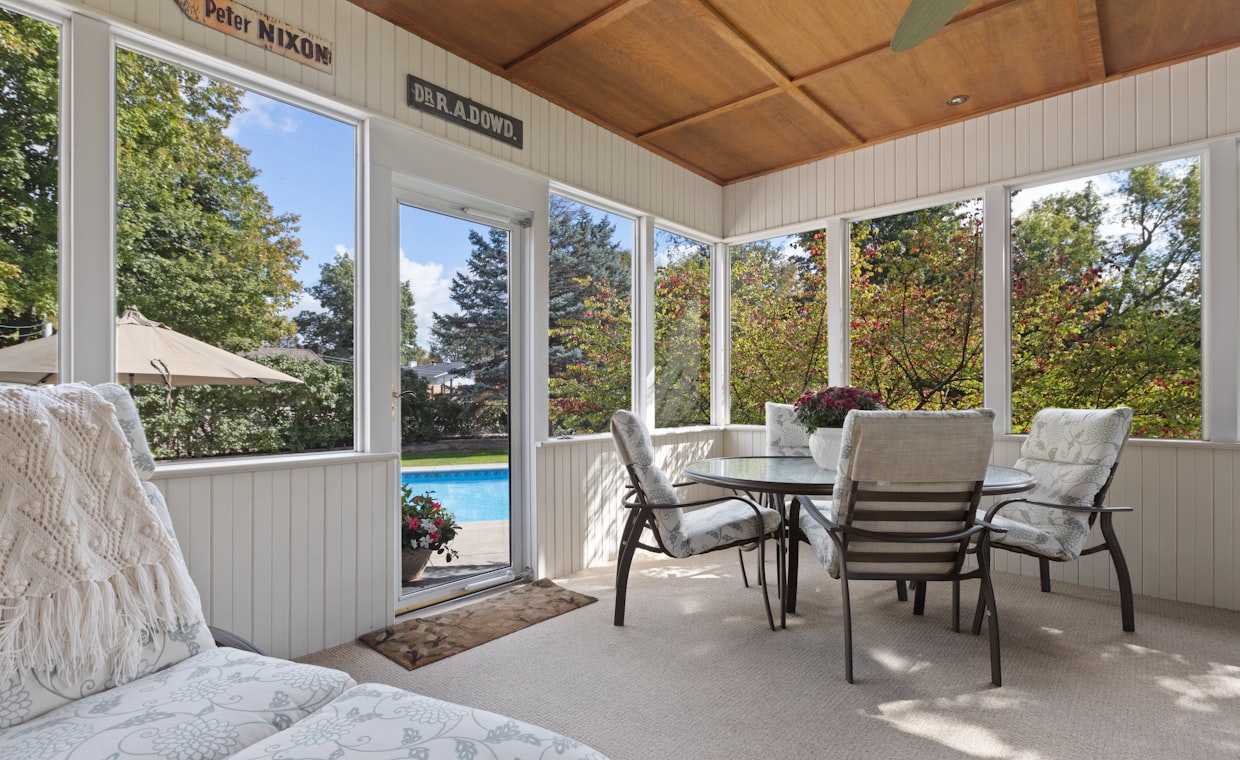
A three-season room is an enclosed porch with a roof, screens or single-pane windows, and no connection to your home heating and cooling. You use it spring through fall, then close it up when the weather turns. It is not counted as heated square footage.
A sunroom (often called a four-season room) is built and insulated to code as real living space. It has proper foundation work, insulated walls, dual-pane glass, and it connects to your HVAC or gets its own heat source. You use it in January without a coat.
"Conditioned space" means the room is heated and cooled as part of your home. That single distinction roughly doubles the build cost, because it triggers insulation, better glazing, foundation depth, and often a permit inspection a three-season room skips.
What Each One Actually Costs in 2026
Prices swing hard by region, glass package, and whether you are building on an existing slab or starting from dirt. The ranges below reflect typical mid-market builds in the US, installed.
| Feature | Three-Season Room | Sunroom (Four-Season) |
|---|---|---|
| Typical total cost | $15,000-$35,000 | $35,000-$75,000 |
| Cost per square foot | $80-$230 | $200-$400 |
| Glass | Single-pane or vinyl panels | Insulated dual-pane, low-E |
| Walls and insulation | Minimal or none | Full insulation to code |
| Foundation | Existing slab or piers | Frost-depth footing or slab |
| HVAC | None (portable at most) | Tied to home system or mini-split |
| Counts as living area | No | Yes |
| Usable months | Roughly 7-9 | 12 |
Notice the per-square-foot gap. A 200-square-foot three-season room might land around $28,000. The same footprint as a true sunroom pushes past $55,000 once you add the footing, the insulated shell, and the heat. Same view out the window, very different invoice.
Where the Money Actually Goes
The big cost drivers are not the pretty parts. They are the boring, code-driven ones underneath.
Foundation. A three-season room often sits on your existing patio slab or a set of piers, which keeps it cheap. A four-season sunroom usually needs a footing dug below the frost line, and that excavation alone can run $6,000-$12,000 before a single wall goes up.
Glass. Single-pane or acrylic panels are inexpensive. Insulated low-E glass, the kind that keeps a sunroom livable in winter, can be three to four times the price per unit.
Heating and cooling. Extending your ductwork is not always simple. If your existing furnace cannot handle the extra load, you are looking at a dedicated mini-split, typically $4,000-$8,000 installed.
Contractor tip worth stealing: ask for the estimate to break out foundation, glazing, and HVAC as separate line items. If a builder lumps them into one "sunroom package" number, you cannot tell where the padding is, and you cannot compare two bids honestly.
The Permit and Tax Trap Nobody Warns You About
Here is where I earn my keep. Because a sunroom counts as conditioned living space, it almost always requires a full building permit and gets added to your home's assessed square footage. That means a higher property tax bill, every year, for as long as you own the house.
A three-season room sometimes slips under a lighter permit, or in some jurisdictions gets treated more like a porch. Lower upfront cost, and often no bump to your assessment. That is a real, recurring savings people forget to factor in.
Do not let a contractor talk you into building a heated room under a porch permit to dodge the assessment. If an inspector or a future buyer's appraiser catches unpermitted conditioned space, you pay to bring it up to code, back taxes may follow, and the sale can stall at closing. The shortcut costs more than the permit ever would.
If you are weighing this addition against other ways to expand, it is worth reading a broader home addition cost comparison first. A sunroom is cheaper per square foot than a full framed addition, but more expensive than reclaiming space you already own.
Which One Adds More Value at Resale?
This is where the math gets interesting. A four-season sunroom counts as living area, so it can lift your appraised value and show up in the square-footage line that buyers filter on. A three-season room usually does not, though it still reads as a nice-to-have feature.
Neither one returns 100 percent of its cost, and anyone who tells you otherwise is selling something. Expect roughly 45 to 60 percent recovery on a sunroom in most markets. That is not bad, but it is not an investment. It is a purchase you happen to recover part of.
If return on investment is your main driver, a sunroom is rarely the smartest dollar. Reworking existing square footage often pays back better. Compare it against finished basement cost numbers, where you are adding usable space without pouring a new foundation, and the value equation frequently tips the other way.
Quick gut check: If you want a year-round room that shows up on the appraisal, buy the sunroom and accept the tax bump. If you mostly want a pleasant place for morning coffee from April to October, the three-season room gives you 80 percent of the joy for roughly half the price.
How to Decide Without Overpaying
Start with honesty about how you will actually use the room. People routinely pay for four-season capability, then admit a year later they never once sat out there in February. If that is you, the three-season room was the right call and you spent double for nothing.
Next, get at least three itemized bids and check that each one specifies the same glass package and foundation type. Bids that look far apart are usually quoting different rooms, not different prices.
Finally, fold this decision into your bigger picture. If the sunroom is one piece of a larger project, map it inside your whole home renovation budget so it does not quietly eat the money you needed for the kitchen. And before you commit, sanity-check it against a list of remodel upgrades worth it for your specific market, because a room you use three months a year rarely tops that list.
Can I convert a three-season room into a four-season sunroom later?
Yes, but it usually costs more than building it right the first time. Retrofitting insulation, swapping single-pane glass for dual-pane, upgrading the foundation, and adding heat can run $15,000-$30,000, and you may pay twice for labor you already covered once.
Does a sunroom really raise my property taxes?
In most jurisdictions, yes. Because it counts as conditioned living space, the assessor adds it to your square footage. The exact increase depends on your local mill rate, but budget for a permanent, recurring bump, not a one-time fee.
Is a sunroom cheaper than a regular home addition?
Usually, yes. A sunroom runs roughly $200-$400 per square foot, while a full framed addition with a solid roof and standard walls often costs $300-$500 or more. The savings come from the glass shell replacing conventional framing and siding.
The choice really comes down to two questions: how many months you will genuinely use the space, and whether you want it on the appraisal. Answer those honestly and the price tag stops being a surprise. Read the estimate line by line, make the builder separate the foundation, glass, and heating, and you will know exactly what you are buying before the first shovel hits the ground.